How Often Should a Commercial Office Be Professionally Cleaned?
How often should a commercial office be professionally cleaned? For many workplaces, professional cleaning several times a week is a reasonable starting point, while busy offices and heavily used shared areas may require daily cleaning. Smaller or lower-use offices may need less frequent visits.
The important distinction is that an office does not necessarily need every area cleaned at the same frequency.
Bathrooms, kitchens and high-traffic floors can require frequent attention, while meeting rooms, low-use spaces and periodic tasks may follow a different schedule. A useful office cleaning schedule accounts for how the workplace is actually used rather than applying the same frequency to every room and task.
How Often Does a Commercial Office Need Cleaning?

There is no single schedule that applies to all commercial offices. The appropriate frequency depends on the number of people using the workplace, operating hours, visitor traffic, shared facilities and how quickly individual areas become dirty between cleans.
For some businesses, a professional cleaning service several times per week will be sufficient for routine cleaning. Others will require cleaners on site every working day, particularly where there are larger teams or frequently used shared facilities.
It is also useful to separate cleaning frequency from cleaning scope.
Having professional cleaners attend five days a week does not necessarily mean every cleaning task should be completed five times a week. Likewise, a smaller office cleaned only a few times per week may still need certain areas attended to more frequently.
A cleaning schedule should therefore answer two questions:
- How frequently does the workplace require professional cleaning?
- What needs to be cleaned during each visit?
Answering both produces a much more useful commercial cleaning schedule than simply choosing a number of services per week.
A Practical Office Cleaning Schedule
Rather than treating the entire office as one space, consider the cleaning needs of individual areas.
|
Office area |
What should determine cleaning frequency? |
|
Toilets and washrooms |
Number of users, operating hours and how well the area remains maintained between cleans |
|
Kitchen and break areas |
Staff numbers, food preparation, frequency of use and waste generated |
|
Bins |
Waste volume, bin location and the type of waste being disposed of |
|
Entrances and reception areas |
Foot traffic and the amount of dirt being tracked into the building |
|
Workstations |
Number of users, desk-sharing arrangements and the agreed cleaning scope |
|
Meeting rooms |
Frequency of use and the number of people regularly using the space |
|
Hard floors |
Foot traffic, flooring type and how quickly dirt or marks accumulate |
|
Carpeted areas |
Traffic levels, visible soiling and the condition of the carpet |
|
Internal glass and windows |
Usage, exposure and how quickly fingerprints, dust or marks become noticeable |
|
Low-use areas |
Actual usage rather than automatically including them in every routine clean |
This approach can also prevent cleaning resources from being spent in the wrong places. A meeting room used twice a week does not necessarily require the same attention as a kitchen used throughout every shift.
The schedule can then prioritise the areas that genuinely require regular cleaning while incorporating lower-frequency tasks where appropriate.
What Changes Your Office Cleaning Frequency?
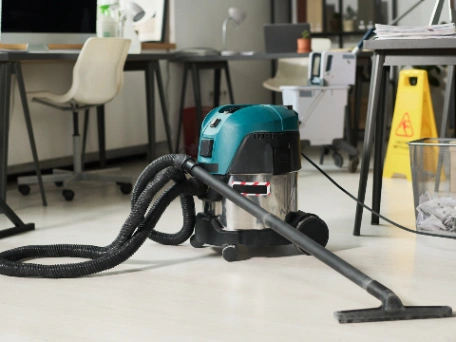
Two offices with a similar floor area can have very different cleaning requirements. The size of the premises matters, but how the space operates is often more important.
Number of People Using the Office
More people generally means greater use of bathrooms, kitchens, bins, entrances and shared areas.
This becomes particularly relevant when deciding whether cleaning a few times per week is sufficient. An office with relatively few occupants may remain well maintained between visits, while a workplace with a larger team can see shared facilities deteriorate much faster.
Staff numbers should therefore be considered alongside the size of the premises rather than using square metres alone to determine cleaning frequency.
Operating Hours and Work Patterns
An office operating during standard weekday hours has different requirements from a workplace that is occupied for longer periods or across multiple shifts.
The timing of professional cleaning also matters. A schedule needs to work around when spaces are being used and provide enough attention to prevent heavily used areas from deteriorating before the next service.
Changes in occupancy can be important as well. If a business grows, introduces additional shifts or begins using previously quiet areas more frequently, the original cleaning schedule may no longer be appropriate.
Shared Kitchens and Bathrooms
Shared amenities are often the areas that determine the minimum cleaning frequency for a workplace.
An office fridge, kitchen benches, sinks, eating areas and bathrooms can receive considerably more use than individual workstations. The fact that the general office remains relatively tidy does not necessarily mean these areas can comfortably follow the same cleaning schedule.
Where amenities are heavily used, they may need daily cleaning even when other parts of the office do not.
Foot Traffic and Visitors
Entrances, reception areas, corridors and other high-traffic spaces tend to require more regular attention than areas with limited use.
The amount of dirt entering the workplace can also change over time. Rather than relying indefinitely on the schedule established when a commercial cleaning service first begins, it is worth assessing whether floors and entry areas are actually remaining at an acceptable standard between visits.
The same principle applies to offices receiving regular visitors, contractors or other people beyond the permanent workforce.
When Does Daily Office Cleaning Make Sense?

Daily cleaning is not automatically necessary for every commercial office, but it becomes more appropriate as usage increases.
A business may benefit from cleaners attending each working day when bathrooms and kitchens are heavily used, bins fill quickly, floors accumulate dirt between services, or there are enough people moving through the premises that a less frequent schedule struggles to keep up.
Even then, daily office cleaning does not mean deep cleaning the entire workplace every day.
A daily service can concentrate on the tasks that need frequent attention, while other work remains on a weekly, monthly or periodic schedule. For example, high-use amenities and waste removal may form part of routine cleaning, while carpet cleaning or more thorough cleaning of particular areas is scheduled separately.
This is why the most effective question is not simply, "Should we have cleaners every day?"
It is: "Which parts of our workplace need daily attention, and which tasks can be scheduled less frequently?"
Routine Cleaning and Deep Cleaning Serve Different Purposes
Increasing the frequency of routine cleaning will not necessarily address every cleaning requirement in an office.
Routine cleaning deals with the tasks required to keep frequently used areas maintained from one service to the next. Depending on the agreed scope, this can include floors, bathrooms, kitchens, bins and other regularly used areas.
Deep cleaning and other periodic cleaning services address work that does not need to happen during every visit.
Carpet cleaning is a good example. Carpeted areas still require regular vacuuming as part of an office cleaning schedule, but periodic carpet cleaning may also be required to deal with accumulated dirt and maintain the carpet beyond what routine vacuuming can achieve.
The same principle can apply to window cleaning, detailed floor cleaning and areas that receive less frequent but more thorough attention.
Separating these tasks makes it easier to build a cleaning schedule around what actually needs to happen rather than trying to include every possible task in every service.
Signs Your Office Cleaning Schedule Needs to Change
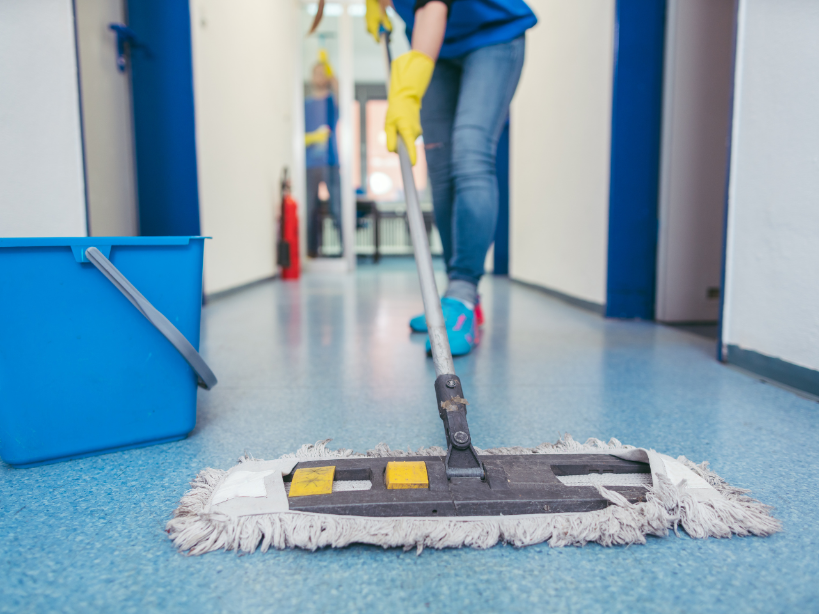
A cleaning schedule that worked when it was first established may not remain suitable indefinitely. Staff numbers change, spaces are used differently and businesses can become busier.
Rather than relying solely on a predetermined number of cleaning visits, look at what is happening between services.
Some practical signs that the current frequency may need reviewing include:
- bins regularly becoming full before the next scheduled clean
- bathrooms requiring attention between cleaning visits
- kitchen and break areas becoming difficult to maintain
- dirt or marks repeatedly building up on high-traffic floors
- staff having to take care of cleaning tasks that should form part of the service
- particular areas consistently requiring additional attention
- periodic cleaning tasks being left until their condition becomes noticeably poor
These patterns can also help identify a more specific problem with the cleaning scope.
If most of an office remains well maintained but one or two areas repeatedly fall behind, increasing the frequency of professional cleaning across the entire premises may be unnecessary. It may make more sense to adjust the frequency or scope for those particular areas.
Setting the Right Cleaning Schedule for Your Business
A useful commercial office cleaning schedule starts with the workplace itself.
Consider each area separately and identify how it is used, how many people use it and how quickly its condition changes between cleans. High-use areas can then be given greater attention without unnecessarily applying the same cleaning frequency to low-use spaces.
It can help to separate requirements into three broad categories:
Routine cleaning: Tasks required regularly to maintain the workplace, including the areas that need attention during normal cleaning visits.
Higher-frequency cleaning: Particular areas or tasks that may require daily attention because of heavier use.
Periodic cleaning: Less frequent work such as carpet cleaning, certain window cleaning tasks or more thorough cleaning that sits outside the normal routine.
The schedule should also be reviewed after it has been operating for a while. If particular areas consistently deteriorate before the next visit, the cleaning frequency or scope can be reconsidered. If some spaces rarely require attention, their frequency may also warrant review.
This creates a cleaning program based on the actual needs of the business rather than an arbitrary rule about how many times an office should be cleaned each week.
Commercial Office Cleaning in Kalgoorlie and the Goldfields
MCD provides commercial cleaning services for businesses in Kalgoorlie-Boulder and across the Goldfields, with experience working across commercial facilities and operational environments in the region.
For businesses reviewing their office cleaning arrangements, the starting point should be understanding what needs to be maintained and how frequently those tasks realistically need to occur.
A cleaning schedule can then be built around the workplace rather than selecting a service frequency first and trying to make the cleaning scope fit around it.
If you're reviewing the cleaning requirements for a commercial office or facility, you can contact MCD online or call 0480 020 821 to discuss your site and cleaning needs.
Office Cleaning Frequency FAQs
Does a Commercial Office Need to Be Cleaned Every Day?
Not necessarily. Daily cleaning can make sense for busy commercial offices with larger teams, heavily used amenities, high foot traffic or areas that deteriorate quickly between services.
Lower-use offices may be adequately maintained with professional cleaning several times per week. The frequency should reflect how the workplace is actually used rather than assuming every commercial office requires daily service.
Is Once-a-Week Office Cleaning Enough?
It can be for some small or lightly used offices, but once-a-week cleaning may not be sufficient where bathrooms, kitchens, bins and floors receive regular use throughout the week.
If shared facilities or high-traffic areas consistently need attention before the next clean, that is a practical indication that the cleaning frequency should be reviewed.
How Often Should Office Bathrooms Be Professionally Cleaned?
The appropriate frequency depends largely on how many people use the bathrooms and how quickly they require attention.
In a busy workplace, bathrooms may need cleaning every working day. Lower-use facilities may require less frequent professional cleaning. Their condition between scheduled visits is a better guide than applying one frequency to every workplace.
How Often Should an Office Kitchen Be Cleaned?
Office kitchens and break areas generally require more frequent attention than low-use parts of a workplace because multiple people share surfaces, sinks, eating areas and waste facilities.
For heavily used kitchens, daily cleaning may be appropriate. The office fridge and other periodic tasks can be incorporated into the broader cleaning schedule according to the agreed cleaning scope.
How Often Should Office Carpets Be Professionally Cleaned?
There is no single carpet cleaning interval that suits every commercial office. Foot traffic, the type of premises and how quickly the carpet becomes soiled all affect how frequently professional carpet cleaning may be required.
Routine vacuuming and professional carpet cleaning also perform different jobs, so carpet cleaning should be considered as part of periodic maintenance rather than a replacement for regular cleaning.
What's the Difference Between Routine Cleaning and Deep Cleaning?
Routine cleaning covers the recurring tasks needed to maintain an office from one service to the next. Deep cleaning is more thorough and generally addresses areas or tasks that do not need the same level of attention during every cleaning visit.
A well-planned office cleaning program can include both, with different tasks scheduled according to their actual requirements.
Build Your Cleaning Schedule Around How Your Office Is Used

There is no universal answer to how many times a commercial office should be professionally cleaned each week.
The better approach is to look at how the workplace operates. Bathrooms and kitchens may need daily attention, high-traffic floors may require frequent cleaning, while lower-use areas and deeper cleaning tasks can follow a different schedule.
When those requirements are considered separately, it becomes much easier to establish a professional cleaning schedule that makes sense for the site.
For commercial office cleaning in Kalgoorlie-Boulder and the Goldfields, contact MCD online or call 0408 901 470 to discuss the cleaning requirements for your workplace.