Why Commercial Cleaning Quotes Can Be Difficult to Compare
You request three quotes for commercial cleaning. Each company is looking at the same building, yet the prices come back surprisingly different.
One quote is considerably cheaper, another includes services the others haven't mentioned, and the third provides a price without much explanation of how the work will be completed.
So, which one represents better value?
The difficulty with comparing commercial cleaning quotes is that two contractors can price the same facility without quoting for the same amount of work. Understanding what's behind each price is often more useful than comparing the final figures alone.
Two Quotes for the Same Building Aren't Always Quoting the Same Job
Imagine two commercial cleaning companies providing quotes for an office with 30 employees, shared bathrooms, a kitchen and several meeting rooms.
Both proposals include five cleaning visits per week. On paper, they appear comparable.
However, the first company allows for daily bathroom and kitchen cleaning, regular floor cleaning and periodic attention to internal glass.
The second includes general cleaning of those areas but treats detailed kitchen cleaning, internal glass and certain floor treatments as additional services.
Neither quote is necessarily wrong. They're simply proposing different cleaning arrangements.
This is why businesses should look beyond descriptions such as general office cleaning or complete commercial cleaning services.
A useful quote should make it clear which areas will be cleaned, what tasks will be completed and how frequently they will be performed.
If you're unsure what should be included in the first place, our guide to What Does a Commercial Cleaner Do? explains common commercial cleaning tasks and the difference between routine and more detailed cleaning work.
Before requesting multiple quotes, giving each provider the same information about your facility can also make their proposals easier to compare.
Why Price Per Square Metre Doesn't Tell the Whole Story
Building size is an important consideration when estimating commercial cleaning costs, but it doesn't tell the whole story.
Consider two facilities measuring 500 square metres.
One is an office with mostly open workstations, a small kitchen and two bathrooms. The other has several shared bathrooms, changing areas, busy entrances and a kitchen used throughout the day.
Although the floor areas are identical, the time and attention required to clean them could be very different.
This is one reason a standard price per square metre can be misleading.
In a video discussing common commercial cleaning quoting mistakes, cleaning business owner Matt makes the point that “every building is different.”
He explains why pricing based on floor area alone can result in estimates that are either too high or too low, depending on the facility.
View Transcript
[0:00] Here are six mistakes to avoid when you're calculating the quote for a commercial cleaning contract that could cost you the deal. So, you're going to learn what they are and what you can do instead. If you don't know who I am, I'm Matt, your seven-figure commercial cleaning CEO. I built our commercial cleaning company from scratch with the help of an incredible team that we built along the way. If you want more information on how we can help you build your commercial cleaning company or more free resources on building your commercial cleaning company, check out the links down below.
[0:25] Okay, so one of the most difficult struggles that I see commercial cleaning business owners having is how to go about pricing so that they can win deals but win them profitably. And this is because there's not a clear benchmark in anybody's market for what the price for commercial cleaning services should be. It's unlike Walmart where you can go in and see the product on some shelf and compare products, prices, value offerings or anything like that.
[0:50] You can't do that with commercial cleaning. It is all very customized. And what ends up happening is even experienced commercial cleaning business owners can make serious mistakes with their pricing that's costing them business. And maybe it's been costing you business for years. So, what you're about to see are those mistakes so that you can avoid them and instead start winning more commercial cleaning contracts.
[1:11] Okay, here's the first mistake and it's rooted around a burning question that just about every single commercial cleaning business owner that I've interacted with has, and that's simply, what is the rate per square foot in my market? And I get it because then what that means is we can simply take the square footage measurement of any building and say, oh, it's 20 cents per square foot for a 10,000-foot building. So that'd be $2,000 a month. Easy quote, right? And that's the mistake.
[1:37] We're drawn to the simplicity of an idea of a simple price per square foot number. And that'll in turn lead us over to an overly simplified approach to quoting the cleaning for a building. Because in reality, what ends up happening is in some scenarios, you're overpriced even at what might seem like a low price per square foot. And in other scenarios, you're underpriced. Here's an example. Here in Asheville, our largest client is over 1 million square feet. And if I were to break down the pricing per square foot on that facility on a monthly basis, it'd be about 23 cents per square foot. It's about 23,000 a month.
[2:09] But then we have another facility, for example, that is approximately 11,000 square feet and we charge them about 45 cents per square foot. And then if you were to continue evaluating our buildings, we've got some that are in between those numbers and some that are even lower. So if I were to try to have a standard price per square foot, even industrywide, right? If I have a medical price per square foot, if I have an industrial, if I have a general office, even then I can oftentimes end up overpriced or underpriced.
[2:35] And if I'm overpriced, I'm most likely not going to win the deal. And if I do win the deal, then how long are they going to stay on as a client? But then if we underprice it, then we're either losing money or it's not worth our time to really manage it. And then quality goes down. We get poor reviews and that hurts the company. So don't make the mistake of trying to price your quotes just on square footage. It can be an indicator. You can compare it to other square footage rates of other clients that you have or any other scenarios that you know that might be similar, but you have to understand that every building is different. Every situation is a little bit more customized.
[3:08] So, what are some other factors that go into this aside from price per square foot? Well, first I would say the primary driver for what your quote should be should be what is your labor cost going to be to clean that building? Because labor in a commercial cleaning company is the biggest expense. So, if you can accurately calculate how long a building will take to clean, then you have a much better chance of being dead on with your quote. Now, to help you out with that, I've included a quote calculator that's in the link down below. And just a quick note on the calculator, it's there to help you have another guide. It's not the final number that you should pick. It's still there to help you judge the scenario and maybe bring you closer to a number that makes more sense.
[3:49] Now, these other factors are going to be ones that directly affect your labor cost. The first is going to be how many shifts do they need. Are they just evening? Do they need daytime? Do they need third shift? Do they need all three of those shifts or just two of them or just one? The next will be what's called density. Of the amount of square footage in the facility, how much of it is actually cleanable? How much of it are you actually responsible for? And then of that space, how much of it is high-density bathrooms? Right? You've got maybe a single-unit bathroom. That's nothing compared to a 10-unit bathroom where it has 10 toilets in it.
[4:20] And the next factor would be frequency. Just cleaning once a week or are you cleaning seven days per week in this facility? And finally is going to be your actual market cost. This is where you can actually get a better gauge because you can look on Indeed, you can use Payscale, you can use several different online resources and you can know whenever you're hiring as well what your response from the market is by applicants based on the hiring wage you're trying to bring employees on at.
[4:43] So those employment costs and hourly costs are essential to know because once you find out how long the building can take, then you can apply your cost per hour to that or however you're going to configure that and then you can do your markup. So that's the first mistake. Do not quote just on a price per square foot. Instead, find your cost to do the services in that building by finding out how long it's going to take and then you can go from there.
[5:06] Now the second mistake is simple, but it will cost you enormously. What many especially new commercial cleaning business owners don't realize whenever they look at a calendar over the course of a year is that each month actually does not have four weeks in it. Instead, if we take the total amount of weeks in every single year, which will be 52 weeks, and then divide that by 12 months, we're going to get the number 4.33333.
[5:33] What this essentially means is that there's an extra week every single three months, which when you translate that to the course of an entire year, that means there's a whole extra four-week period every single year. Now, in calculating your quote, let's say it's going to be $200 a day that you're going to charge a client for cleaning, and they've got cleanings going on five days per week, so $1,000 per week. If you were just to multiply that by four and get $4,000 per month, then you would actually be missing out on an extra $4,000 every single year because you're missing a whole month.
[6:06] So, be sure that when you're calculating your quotes on a monthly basis that you make sure that every single calendar year, you're actually charging for 13 four-week periods. The way that I like to calculate our monthly price that we present to a client is we get our weekly rate. That's easy, right? Whether it's one day a week, five days a week, seven days a week. And then I multiply that weekly number by 4.33. And that equals the monthly number that we need to charge. That's also going to cover that extra four-week period that happens over the course of a year. So don't make the mistake of thinking that there's only four weeks per month. That'll end up costing you tremendously on your profitability every single year.
[6:44] The third mistake revolves around using the wrong wage to figure out what your cost is going to be. Let's say that in your commercial cleaning company, you have employees that are paid at a range from $16 per hour up to $20 per hour. If you're doing all of your quotes based on that $20 per hour mark, you're most likely going to be dramatically overpriced in your market. Within the commercial cleaning industry, team members need to be paid more whenever they are more valuable to the company and they offset the cost of their higher wage.
[7:16] Here's what that looks like. Either they're with you longer and you don't have to replace them, right? You can just, they're out there, they're cleaning, you can set it and forget it. That is a much better scenario than when you have to keep replacing somebody or a single role and it costs you time, it costs you money in hiring and training and the hourly wages of your employees trying to train them, all those extra costs that happen in your company. Or it could also be this on top, they're just more productive, right? They get the job done well, but they do it more efficiently and therefore they're essentially saving you time. So, they deserve to be paid more money.
[7:47] They could also be saving your company money by taking on some extra tasks along with their normal shifts. Maybe they help you out with some errands or some stuff in the office. So, it's great if you want to pay your cleaners more, but your client's price needs to be based on the market rate. Now, that doesn't mean that you need to charge the same as a competitor because you can start your employees a little bit higher because you're expecting a better person. You can also have more profit built in because your company is better run. There's different factors like that.
[8:13] But for you and your company, I would encourage you, this is what we have been doing for years successfully, is basing our hourly cost that we're going to mark up in our quoting process. We're going to base it on what is the starting wage within our company. So don't make the mistake of unreasonably overpricing your quotes and thus you will be losing opportunities just because you're basing it off of the wrong wage.
[8:36] Now, this fourth one is such a temptation. It's because oftentimes when we go do our commercial cleaning walkthroughs, when we talk with these buildings that are in pain and they're in need, we think that they're just willing to pay almost anything to get us in there. And if we do our sales process right, price isn't going to be as much of a factor. But there is a point we need to realize that we're being absolutely unfair to the client.
[9:00] And what that looks like is taking a facility and knowing that you can do it, say, in three hours per clean, but you feel like the client likes you so much you're going to go ahead and price it at four hours per clean. Maybe you can make some extra profit along the way. You feel like they're going to choose you just about no matter what. Well, and this is my opinion. I don't believe that that is the best way to scale your commercial cleaning business by milking clients one at a time.
[9:23] I believe that you grow by adding fair profit to your company account by account by account. And your focus should not be on how much can I squeeze out of this one building because what we want to do or what I encourage our students to do and what we do in our franchise is we want to keep them forever. That's how we win in the long run, is by stacking up a mountain of book of businesses and then we do a great job serving them at a fair price and they stay forever. So the key here is know what your normal markup and profit is within your commercial cleaning company and stick to that as your benchmark.
[9:58] Number five, and this somewhat links in with number four a little bit with trying to do something unique for a specific client or more like having a specific client pay the entire load for a certain expense. And the most common example of this is with insurance. I remember early on in our business, we got a request for a quote from a facility, but they had higher insurance requirements in order for us to actually win their business. So, in order to win a deal with them, we had to increase our insurance coverage.
[10:25] And the temptation was to stack that entire expense just on that one client because we look at the scenario and we say, "Well, this client's causing me to spend all this extra money." But in reality, that insurance applies companywide. And the expense of it is technically spread out across all of your clients. If we had gone to that client and had them pay for all of the expenses associated with that one insurance policy that benefits everybody else, then it would have been a little unfair in my opinion because then we never had to increase our insurance again and we've been able to successfully win other companies that also had those same insurance requirements.
[11:04] Now, to be clear, we did charge a little bit higher of a rate for them and also we did not go to all of our other cleaning clients and make them pay more money just for that. You just have to come to the realization as a business owner that you're there for the long term to serve all these buildings that you currently have and the ones that are to come. So, whenever you have a prospect or a client that introduces a need that you need to bring to the table, don't make them be the only one to pay for it. Sometimes it's something that you just need to add on to your business as a part of your company and absorb.
[11:36] Okay. Now, it's following along that same line of thinking here. It's so many times where I see different commercial cleaning business owners wanting to charge a whole lot more money upfront whenever they win a contract. And what I'm not talking about is billing your clients upfront. I completely believe in that. But what I am talking about is having a one-time heavy charge to cover equipment, to cover maybe a deep clean, anything that's going to cover your cost to get everything set up.
[12:02] Now, to be clear on this, there are some scenarios where that is absolutely necessary. But for about 90 to 95% of commercial cleaning contracts, what we do is we just build it in as a monthly rate. So we have a supply and equipment cost that we build into our markup. And that's spread out over the course of a year and sometimes two years depending on the kind of equipment that's involved in that facility.
[12:24] So instead of making your client pay $600 upfront and that being a major hurdle to them starting business with you, instead just spread it out as a $50 per month piece that's added into your quote. You don't even need to say that it's added in there. You just say here's the price to produce services for your facility because again we're in this for the long term. You're going to be getting paid anyways on the services with your markup. So you make a little bit less money during that first month getting everything going and the time you got to put in and the equipment you got to put there, but then you don't have to buy that equipment again many times for years.
[12:56] And so by the time it is time to buy those again, you've already collected more than you need in most common scenarios in order to make that happen and you've had enough profit along the way and you're making plenty of money. Look, winning more commercial cleaning contracts and getting the price right is an art and it is also a science.
[13:14] If you're ready to scale your commercial cleaning company to a million dollars in recurring revenue and set it to run on less than five hours per week, just like mine has done, then check out the link down below where we can help you do just that and I give you everything that you need. If you found this video helpful, please like, subscribe, and I actually filmed a video on a quote formula which you can watch right here. So, if I don't see you in the links down below where we can help you build your commercial cleaning company, then go check out that.
The important consideration is how the building is used, not simply how large it is.
Bathrooms, kitchens, foot traffic, furniture layouts and the proportion of space that actually needs cleaning can all influence the work involved.
The Hours Behind the Price Matter More Than You Think
One of the biggest differences between commercial cleaning quotes can be the time allocated to completing the work.
For example, two companies might propose cleaning the same facility five days per week.
One allows two hours per visit, while the other allows three.
That creates a difference of five cleaning hours every week, even though both quotes describe the same number of visits.
The higher-priced proposal may account for more detailed work, additional areas or a different approach to completing the cleaning schedule.
However, more hours don't automatically mean better results.
The question is whether the proposed time is appropriate for the building, its occupancy and the tasks being requested.
This becomes particularly important in facilities with heavily used amenities or cleaning requirements that change throughout the week.
A workplace that is quiet on Mondays but extremely busy towards the end of the week may not need exactly the same attention every day.
When reviewing a quote, ask how the contractor has determined the cleaning schedule and whether the proposed hours realistically cover the agreed scope.
What's Included, What's Extra and What's Been Left Out?
A cleaning quote can appear comprehensive until you discover that certain tasks or supplies are charged separately.
For example, a regular commercial cleaning arrangement might include vacuuming, mopping, bathroom cleaning, rubbish removal and wiping accessible surfaces.
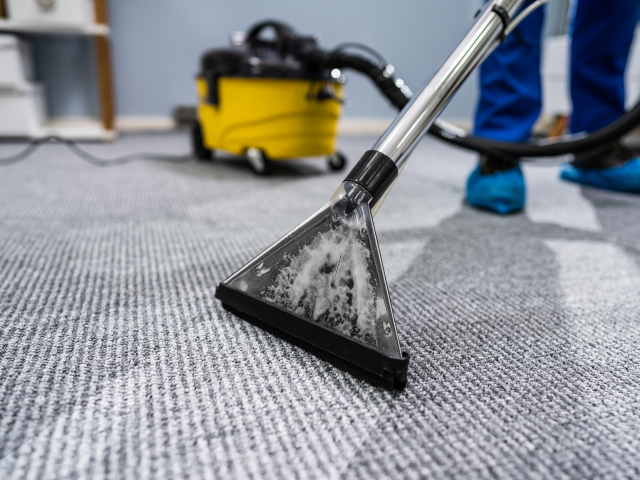
But what about carpet extraction, detailed floor cleaning, internal glass, kitchen appliance interiors or additional cleaning following an event?
These services may be included periodically, quoted separately or excluded altogether.
The same applies to supplies.
Cleaning chemicals and equipment are not necessarily treated the same way as toilet paper, hand soap, paper towels and bin liners. A quote should clarify who is responsible for supplying each item.
It's also worth checking how additional visits, public holidays and changes to the agreed cleaning scope will be charged.
None of these exclusions automatically make a quote poor value. Problems arise when businesses assume a service is included and discover later that it isn't.
When comparing commercial cleaning services, the most useful question isn't simply what does it cost?
It's what exactly are we getting for that price?
The Goldfields Factor: When Location Changes the Quote
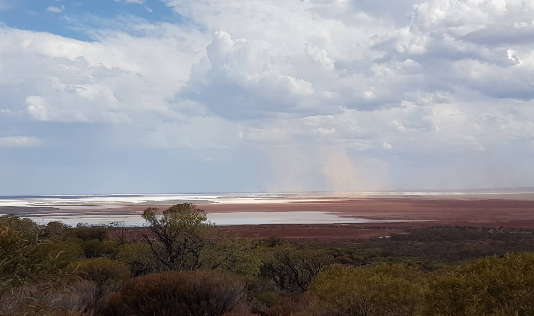
A commercial cleaning quote for an office in central Kalgoorlie can look very different from one for a mine-site facility outside town, even when the buildings are similar in size.
Location is only part of the difference.
Travel distances, site access arrangements, operating hours and the way a facility is used can all affect how cleaning services are planned.
Consider these two examples:
Quoting consideration
Kalgoorlie office
Regional mine-site facility
Access
May have standard after-hours access
May require site inductions or restricted access arrangements
Cleaning schedule
Often planned around office hours
May need to accommodate shift changes
Shared amenities
Staff kitchen and bathrooms
Potentially high-use crib rooms, showers and change rooms
Travel
Relatively straightforward within town
May involve additional travel time and coordination
Cleaning frequency
Based on occupancy and workplace use
May depend on workforce numbers and operating schedules
These are illustrative differences rather than requirements that apply to every site.
Dust and dirt brought into buildings can also influence the frequency of floor cleaning and attention needed around entrances.
For businesses comparing commercial cleaning quotes in Kalgoorlie and the wider Goldfields, it is worth checking whether each contractor has accounted for the actual location and operating conditions.
It's tempting to assume that the cheapest commercial cleaning quote must involve cutting corners.
But price alone doesn't tell you that.
A contractor may have a different approach to scheduling, equipment, staffing or completing particular tasks. They may also have misunderstood the scope or excluded work that another provider has included.
Likewise, a higher price doesn't guarantee a better cleaning service.
Rather than judging a proposal by its price, ask how the provider intends to deliver the agreed work.
For larger or more complex facilities, it is also sensible to check relevant insurance, workplace safety arrangements and any site-specific requirements.
The objective is to understand what you're paying for and whether the proposed service is suitable for your facility.
How to Compare Commercial Cleaning Quotes Side by Side
The easiest way to compare commercial cleaning quotes is to put the important details next to each other.
For example, imagine two contractors quoting for the same commercial facility.
Quoting detail
Quote A
Quote B
Monthly price, excluding GST
$2,000
$2,600
Cleaning visits
5 per week
5 per week
Time allocated
10 hours per week
15 hours per week
Bathrooms and kitchen
Included
Included
General floor cleaning
Included
Included
Periodic deep cleaning
Quoted separately
Quoted separately
Cleaning products
Included
Included
Bathroom consumables
Supplied by client
Included
Additional visits
Separate charge
Separate charge
These figures are fictional and provided only to demonstrate how quotes can differ. They are not MCD pricing or recommended market rates.
At first glance, Quote A is $600 cheaper per month.
However, Quote B includes five additional cleaning hours each week and supplies bathroom consumables.
That doesn't automatically make Quote B better value.
If the facility can be cleaned effectively within the hours proposed by Quote A, the additional time may not be necessary. On the other hand, if ten hours is insufficient to complete the required work, the lower price could become frustrating.
There is also the question of consumables. A business supplying its own toilet paper, soap and paper towels needs to account for those costs when comparing the proposals.
The best comparison considers the total cost alongside the work being delivered.
Before choosing a contractor, ask each provider to explain any significant differences in their proposed scope, schedule or price.
What Should You Ask Before Signing a Cleaning Contract?
Once you've narrowed down your options, a few practical questions can help clarify what will happen after the cleaning service begins.
What exactly is included? Request a written scope identifying the areas, tasks and cleaning frequencies.
How will the work be checked? Ask how cleaning quality is assessed and how concerns are raised.
What happens when something is missed? Establish who to contact and how problems will be addressed.
Who manages access? Clarify keys, site entry, induction requirements and cleaning times.
How are changes handled? Find out how additional tasks or changes in facility use are approved and charged.
What are the contract terms? Review notice periods, price adjustments and arrangements for ending the service.
These questions are particularly useful when comparing ongoing commercial cleaning contracts, where small misunderstandings can become recurring problems.
A clear agreement helps both the business and the cleaning provider understand what is expected.
Commercial Cleaning Quotes in Kalgoorlie and the Goldfields
Commercial cleaning requirements can vary considerably between offices, industrial workplaces, mine-site facilities and other commercial properties.
MCD Group provides commercial cleaning and mine-site cleaning services in Kalgoorlie and the Goldfields, with an understanding of the practical considerations involved in maintaining regional facilities.
If you're comparing cleaning providers, it helps to discuss your building's layout, how the premises are used, preferred cleaning times and any particular areas requiring attention.
Need to discuss cleaning requirements for your facility?
Contact MCD Group online or call 0480 020 821 to discuss your site and the cleaning services you're looking for.
Frequently Asked Questions About Commercial Cleaning Quotes
Why do commercial cleaning quotes vary so much?
Quotes can differ because contractors allow for different cleaning hours, frequencies, tasks, supplies and site requirements. Comparing the written scope alongside the price helps identify those differences.
Should commercial cleaning quotes include cleaning supplies?
A quote should clearly explain which cleaning products, equipment and consumables are included. Items such as toilet paper, hand soap and paper towels may be supplied by the contractor or the client, depending on the agreement.
Is the cheapest commercial cleaning quote always the worst option?
No. A lower quote may represent good value if it includes the required work and provides sufficient time to complete it. The important consideration is whether the scope, frequency and proposed service meet your facility's needs.
Compare the Work, Not Just the Price
Choosing a commercial cleaning company shouldn't come down to selecting the lowest figure on a spreadsheet.
A useful comparison looks at the cleaning tasks, time allocated, frequency, additional charges and the practical requirements of your facility.
When those details are clear, it's easier to identify which proposal offers the right service for your business and avoid surprises after the contract begins.
Looking for a Commercial Cleaning Quote in Kalgoorlie?
Comparing quotes is important, but the best place to start is with a cleaning service that reflects what your facility actually needs.
Whether you're reviewing your current cleaning contract, looking for a new commercial cleaner or arranging cleaning for a mine-site facility, MCD Group can discuss your requirements and provide a quote based on the work involved.
We provide commercial cleaning and mine-site cleaning services across Kalgoorlie and the Goldfields, helping businesses manage the cleaning requirements of their workplaces and facilities.
Ready to get a commercial cleaning quote?
Don't settle for a price without understanding what's included. Speak with MCD Group about your facility, cleaning schedule and service requirements.