The Work Between Contractors Is Easy to Underestimate
Outsourcing a facility service removes the need to perform that work internally, but it doesn't remove every task associated with managing it. There are still scopes to define, contractors to communicate with, site access to coordinate, quotes to approve, issues to resolve and completed work to keep track of.
Individually, these tasks can seem minor. The workload becomes more noticeable when several contractors are involved across the same facility, or when an organisation is responsible for multiple sites.
A commercial property might have one provider handling routine cleaning, another brought in for specialist or periodic work, and separate contractors responsible for building maintenance. Mining operations can add further requirements across crib rooms, amenities, accommodation and other facilities.
The issue isn't simply the number of companies involved. It is the coordination that happens between them.
A contractor notices something outside their scope. Someone on the client side needs to decide what happens next. Photos might need to be taken, another provider contacted, the problem explained again, a quote requested, access arranged and the work scheduled. Afterwards, someone may still need to confirm that the issue has been resolved.
None of those steps is particularly unusual. Collectively, they can create a surprising amount of work for the person responsible for keeping a facility running.
Facilities Don't Fit Neatly Into Contractor Scopes
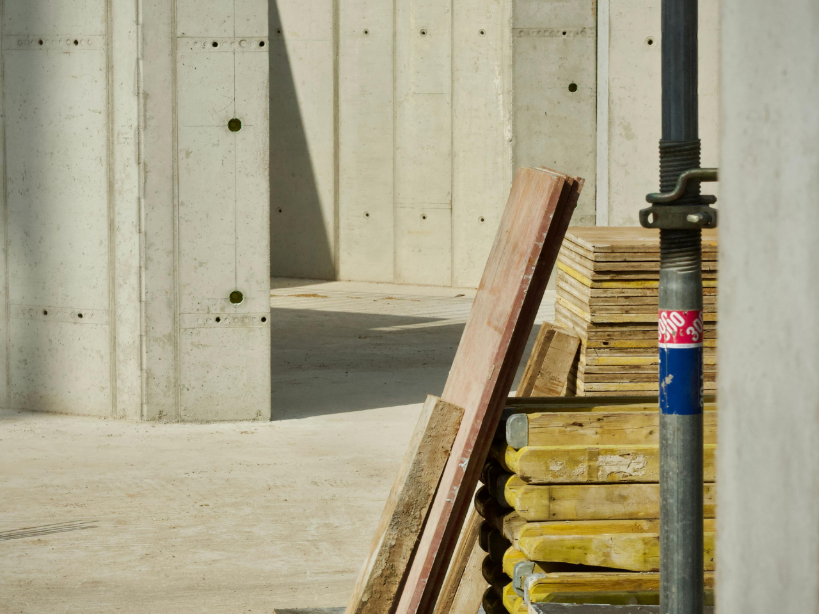
A leaking tap, damaged wall and dirty floor can all exist in the same room. On a contractor list, they are separate scopes. For the person responsible for that facility, they are three problems sitting a few metres apart.
This is where contractor management can become unnecessarily fragmented.
Cleaning provides a good example because the condition of a facility does not always fall neatly into either "clean" or "needs repair". A floor might initially require routine cleaning. At another point it may need a more intensive deep clean. Eventually, deterioration of the surface itself may mean cleaning is no longer the appropriate solution.
Walls create the same distinction. Marks and dirt can sit within the cleaning scope, while holes or physical damage require maintenance. Damaged shelving may be noticed during routine cleaning, but repairing it is a different task again.
The important question is not whether one contractor can perform every conceivable service. In many situations, specialist work should remain with appropriately qualified specialist providers. The opportunity is to identify where closely related facility services can sensibly sit together without creating unnecessary handovers.
For facilities managers, that can mean spending less time deciding who owns relatively straightforward problems and more time managing the facility itself.
Take a Mine Site Crib Room as an Example
A mine site crib room brings several of these requirements together in one space.
Routine cleaning may cover floors, tables, bins, shared meal areas and other agreed surfaces. Periodic deep cleaning may be required for work outside the everyday scope. At the same time, the physical condition of the room can create completely separate requirements: a damaged wall may need repairing, shelving may need attention, or flooring may reach the point where cleaning alone will no longer improve it.
MCD has encountered this distinction directly through its work in mine site facilities. A recent crib room floor refresh is a useful example. The condition of the floor had moved beyond the normal cleaning requirement, so addressing the facility meant looking at the surface itself rather than simply adding another cleaning task.
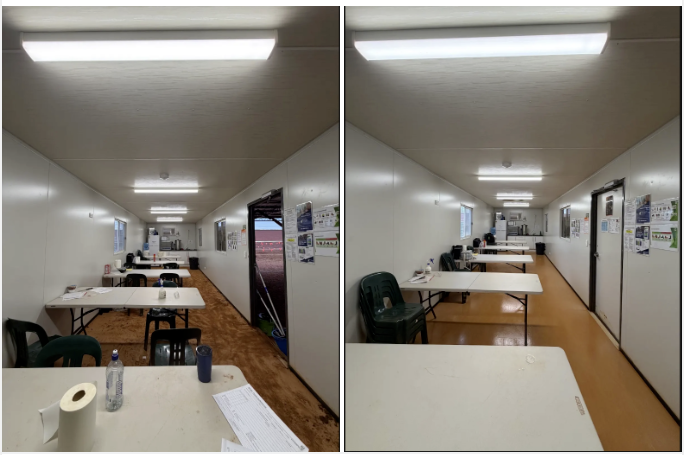
This is also why cleaning and maintenance can be useful services to consider together. The person managing the crib room does not experience these as abstract service categories. They see a shared facility that needs to remain clean while physical wear and maintenance requirements are addressed as they arise.
For a more detailed look at the space itself, see [How Should a Mine Site Crib Room Be Cleaned and Maintained?]
Every Contractor Handover Creates Another Task for Someone
When a provider cannot address an issue, handing it over to another contractor is sometimes exactly the right response. The important point is that a handover isn't administrative free space.
Someone has to make it happen.
If a cleaning team identifies damage to a wall, for example, the issue may need to be reported to the facilities contact. The maintenance requirement then has to be described or photographed, sent to the appropriate contractor, quoted if necessary and scheduled around access to the site. If that contractor needs additional information, the facilities team becomes the link between what was originally observed and the person being asked to repair it.
Multiply that process across flooring, minor repairs, cleaning, laundry and other recurring facility requirements and the small handovers begin to matter.
This does not mean businesses should try to eliminate specialist contractors. It means there is value in asking whether every separate contractor relationship is necessary.
Where a provider genuinely has capability across several related services, consolidating those requirements can remove some of the coordination that would otherwise sit with the client.
The distinction is important: the objective isn't to have one company do everything. It is to avoid creating separate contractor relationships where doing so adds management without adding useful specialist capability.
Where Consolidating Services Can Simplify Contractor Management
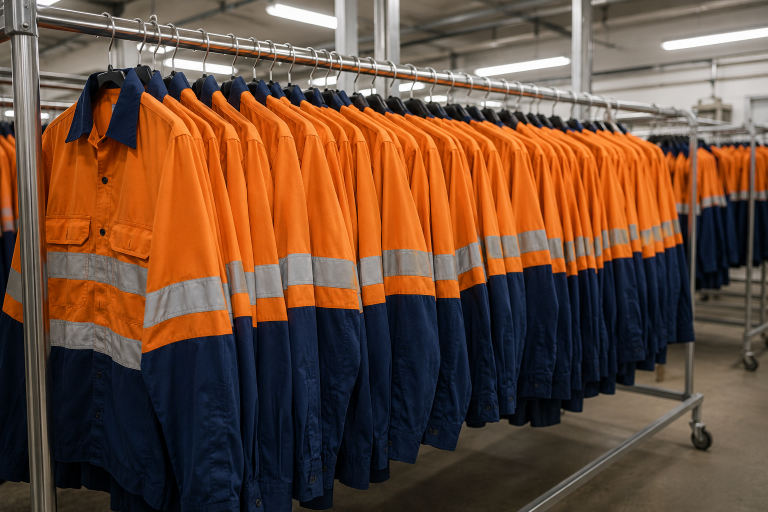
Consolidating contractors is most useful when the services are closely related, occur across the same facilities and can genuinely be delivered by the same provider.
Cleaning and minor building maintenance are a good example. The work itself is different, but both services deal with the ongoing condition of the same buildings. A cleaning team may regularly work through offices, amenities, crib rooms or accommodation and encounter maintenance issues that sit outside its scope. If the same provider also has the capability to address relevant maintenance work, the issue may not require an entirely new contractor relationship.
The same principle can apply to periodic or deep cleaning. Rather than treating every requirement outside routine cleaning as a separate service to source and coordinate, it may make sense for the existing provider to complete that work where they have the appropriate capability.
Commercial laundry can create another point of overlap for facilities that require it. Cleaning and laundry remain distinct services, but both can form part of the recurring operational requirements associated with accommodation, mining and other commercial facilities.
The value comes from consolidating services that have a logical relationship, not from trying to place every facility requirement with one company.
When a Specialist Contractor Still Makes More Sense
There is a point where consolidation stops being useful.
Some work requires specialist qualifications, technical expertise, equipment or capabilities that sit well outside the services of a general facilities provider. In those situations, appointing an appropriate specialist is not inefficient contractor management. It is simply the right way to procure the work.
This is why the number of contractors should never be the only measure of an efficient facilities model. Reducing a supplier list has little value if it means compromising the capability required for a particular job.
A more useful approach is to look for unnecessary fragmentation. If closely related cleaning and maintenance requirements can be handled effectively through an existing provider, there may be little benefit in creating another contractor relationship. Where the work genuinely requires specialist capability, the additional relationship serves a clear purpose.
The objective is not one contractor at any cost. It is a contractor network that makes sense for the facility.
One Provider Only Saves Time if the Services Are Actually Joined Up
A company can offer a long list of services without making life any easier for the client.
If cleaning, maintenance and other facility services all sit under the same company name but require separate contacts, repeated explanations and constant coordination from the facilities team, very little has actually been consolidated from the client's perspective.
This is an important distinction when assessing a facilities service provider. The question should not only be "How many services can this company provide?" It should also be "How will those services be managed once we start working together?"
Consider what happens when an issue crosses from one scope into another. Does the client have to identify the correct service, find another contact and start the conversation again? Or can the provider coordinate the relevant requirement internally and give the client a clear path forward?
The second model is where consolidation can begin to save meaningful time.
For facilities teams, the real benefit is not having one logo across several contracts. It is reducing the amount of coordination that still lands back on their desk.
The Coordination Problem Grows Across Multiple Sites
Contractor management becomes more complicated again when an organisation is responsible for several facilities or locations.
A separate cleaning contractor, maintenance contractor and other service providers may be manageable at one facility. Across multiple sites, the number of schedules, scopes, contacts and outstanding jobs can increase quickly.
Consistency can become harder to manage as well. Different locations may have different requirements, but the organisation still needs a clear way to understand who is responsible for each service and how issues are handled.
This is where consolidating relevant facility services can have greater practical value. A provider capable of supporting several requirements across multiple locations can reduce the number of separate relationships the client needs to maintain while still allowing individual sites to have scopes that reflect how they are actually used.
It does not mean every location should receive identical services. In fact, good facility support should recognise where the requirements differ.
What becomes more consistent is the way those requirements are managed.
What to Look for Before Consolidating Facility Contractors
Before moving several services to one provider, it is worth looking beyond the convenience of having fewer suppliers.
The provider should have genuine capability in each service being considered. The scope of each service should remain clear, responsibilities should be understood, and there should be a straightforward process for dealing with issues that cross between different areas of work.
It is also worth considering what happens when requirements change. Facilities rarely remain static. Usage changes, buildings deteriorate, new maintenance requirements appear and cleaning scopes may need to be adjusted.
A provider that offers several relevant services can be useful, but only if those capabilities translate into a simpler working relationship.
The test is relatively straightforward: will consolidating these services remove coordination from your team, or simply move the same coordination somewhere else?
Cleaning, Laundry and Maintenance Support From MCD Group
MCD Group's service offering extends across several areas that can naturally overlap within commercial and mining facilities, including commercial and mine site cleaning, deep cleaning, commercial laundry and building maintenance support.
For clients requiring more than one of these services, the opportunity is not simply to reduce the number of contractors on a supplier list. It is to consider whether related requirements can be managed more practically through a provider that already understands the facility and the environment in which the work is being completed.
This can be particularly relevant across the Goldfields, where MCD supports commercial and operational facilities with both recurring services and practical maintenance requirements.
Not every job belongs with the same contractor, and not every client needs the same combination of services. The aim is to identify where consolidation makes operational sense and where specialist support remains the better option.
If your organisation is reviewing its current facility contractors or looking at ways to consolidate relevant cleaning, laundry and maintenance requirements, contact MCD Group online or call 0480 020 821 to discuss your facilities and current service requirements.
Related Facility Services Without the Extra Contractor Relationships
For organisations reviewing how many contractors they are managing, it can be useful to start with the services that already overlap across the same facilities.
MCD Group supports commercial and mining facilities across Kalgoorlie-Boulder and the Goldfields with commercial and mine site cleaning, deep cleaning, commercial laundry and building maintenance services, including practical maintenance and carpentry-related work.
These services remain separate scopes, but they often exist alongside one another. A facility receiving regular cleaning may occasionally require a deep clean. A mine site accommodation facility may also have commercial laundry requirements. A cleaner working through a building may encounter damage that requires maintenance rather than another cleaning task.
Where it makes sense to bring those requirements together, MCD can support multiple areas of facility upkeep without the client needing to source a new provider for every related job.
If you're reviewing your current facility contractors or looking at where services could be consolidated, contact MCD Group online or call 0480 020 821 to discuss what you're currently managing.
Frequently Asked Questions
What facility services can be consolidated with one provider?
This depends on the provider's actual capabilities and the requirements of the facility. Related services such as commercial cleaning, deep cleaning, commercial laundry and certain building maintenance requirements may be suitable for consolidation where one provider is equipped to deliver them.
Is one facilities provider always better than using several contractors?
No. Specialist contractors remain appropriate where work requires specific expertise, qualifications or capabilities. Consolidation is most useful when separate contractors are being used for closely related services that could reasonably be managed together.
Can cleaning and building maintenance be managed by the same provider?
They can be, where the provider genuinely offers both services. Although cleaning and maintenance have different scopes, they often relate to the same physical facilities, making coordination between the two useful for certain commercial and mining environments.
Does consolidating contractors make more sense across multiple sites?
It can. Managing separate providers across several locations can increase the number of contacts, schedules, and scopes an organisation needs to coordinate. Consolidating appropriate services can simplify some of that management while still allowing each site to have its own requirements.
Fewer Contractors Isn't the Goal. Better Coordination Is.

The strongest facilities model is not necessarily the one with the shortest contractor list.
Specialist providers have an important role, and there is little value in consolidating work simply for the sake of saying it sits with one company. The opportunity lies in recognising where separate contractor relationships are creating administration without providing a corresponding specialist benefit.
Facilities themselves rarely respect the boundaries between supplier scopes. Cleaning, deep cleaning, laundry and maintenance requirements can exist alongside one another, sometimes within the same building or room.
When related services can be managed together effectively, the result is not simply fewer contractors. It is fewer handovers, clearer responsibility, and less coordination being pushed back onto the facilities team.
That is where one facilities provider can genuinely start to save time.