Professional Cleaning Requires More Than One Type of Cleaner
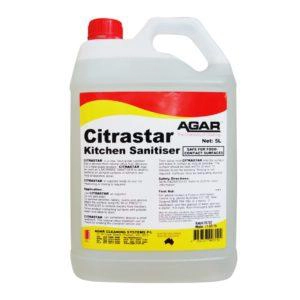
Why do commercial cleaners use different cleaning products for different surfaces? Commercial facilities can contain a wide range of materials, finishes and cleaning requirements, and the product that works well in one area may have a very different purpose elsewhere.
An office alone can include carpet, glass, stainless steel, tiled areas, painted surfaces and different types of flooring. Add washrooms, kitchens, shared amenities, industrial areas or mine site facilities and the range of cleaning requirements becomes considerably broader.
Professional cleaners therefore need to consider more than whether a surface looks dirty. Product selection depends on the surface being cleaned, what needs to be removed, the type of cleaning being carried out and the directions provided for the product itself.
MCD's commercial cleaning product range provides a practical example. AGAR VENUE is formulated for surfaces including glass, stainless steel and chrome, while AGAR Fresh Mop is designed for use on particular hard floor surfaces. AGAR Fresco has a different role again, with applications across washrooms, showers, toilets and ceramic tiles.
They are all cleaning products, but they are not interchangeable. Their different applications demonstrate why professional cleaning relies on selecting a product for the job rather than expecting one cleaner to perform every task within a facility.
The Surface Is Only Half of the Cleaning Decision
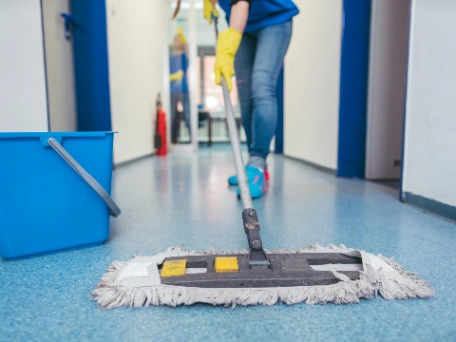
Identifying the surface is an important starting point, but professional product selection also considers what is actually on that surface.
Two floors can require different approaches even when they appear to have the same basic problem. One may simply need regular cleaning to remove everyday dirt and debris. Another may have accumulated residue or more substantial build-up that requires a different cleaning agent or a more intensive cleaning method.
The distinction becomes clearer when looking at more specialised products. AGAR Acid Wash, for example, has applications involving rust, scale and lime deposits, as well as excess grout on newly installed ceramic tile floors. That is a very different cleaning requirement from routine floor care.
The same principle applies throughout commercial buildings. Fingerprints and oils on stainless steel present a different problem from grease, soap build-up in a washroom or everyday dirt on a floor. Selecting the right cleaning products therefore involves assessing both the surface and the material that needs to be removed from it.
Product directions also matter. Commercial cleaning products can have specific requirements relating to dilution, application, contact time, rinsing and suitable surfaces. Following those directions is part of using a professional cleaning product correctly.
Why One Cleaning Product Cannot Do Every Job
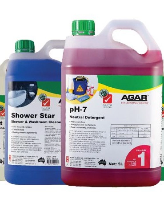
General-purpose cleaners have an important place in both household and commercial cleaning. Their usefulness does not make them the right choice for every cleaning task.
Different cleaning agents are formulated to perform different functions. A glass cleaner is intended for a different application from a floor detergent. Degreasers address particular types of soil, while other products are formulated around bathrooms, washrooms, carpets, floors or more specialised cleaning requirements.
Even products within the same broad category can have different purposes. MCD stocks both AGAR Fresh Mop and AGAR Shiny Wash, for example. Fresh Mop is formulated for high-gloss hard floors including terrazzo, marble, slate and polyurethane-sealed timber, while Shiny Wash is intended for sealed vinyl, linoleum and stone floors and combines cleaning with gloss restoration.
This is an important distinction in professional cleaning. A commercial cleaner is not simply choosing between a weak product and a strong product. The objective is to select an appropriate cleaning agent for the surface, the cleaning requirement and the result being sought.
Carrying several cleaning products and supplies is therefore not unnecessary complexity. It allows professional cleaners to match the cleaning approach to the task rather than asking one product to perform work it was not designed to do.
What Can Happen When the Wrong Cleaner Is Used?
Using the wrong product can make a cleaning task less effective and create unnecessary additional work. A cleaner that is poorly matched to the problem may fail to remove the dirt, stains or residue being targeted, while incorrect product use can leave unwanted residue or require an area to be cleaned again.
Surface compatibility is another consideration. Different materials and finishes can have specific cleaning requirements, which is why suitability should be checked and manufacturer directions followed rather than assuming that a familiar cleaner can be used everywhere.
Using more cleaning chemical is not necessarily the solution either. Products designed to be diluted or applied in a particular way should be used according to their instructions. Increasing the amount does not automatically produce a better cleaning result.
Effective commercial cleaning comes from combining an appropriate product with the correct method and application. Product knowledge is therefore part of the professional cleaning process, rather than simply a matter of having more bottles available.
Household Cleaning Products vs Commercial Cleaning Products
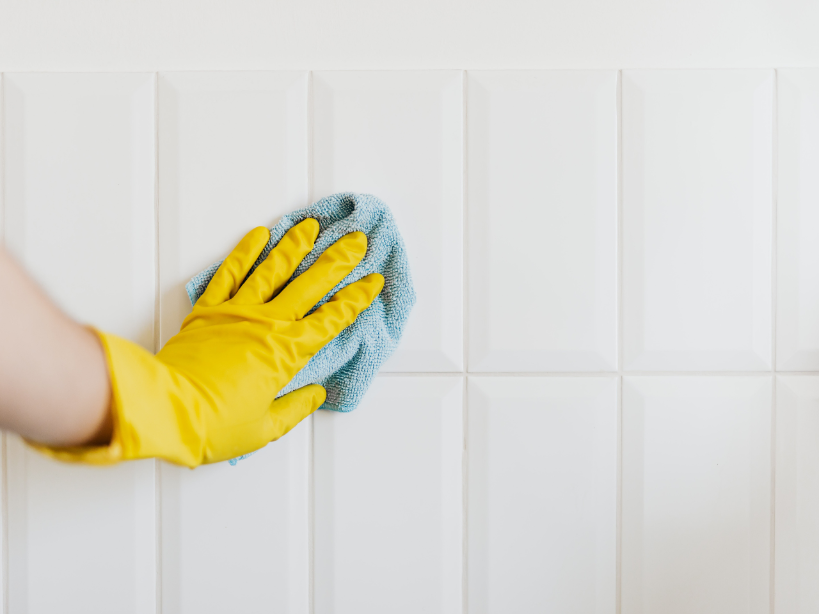
The difference between household and commercial cleaning products is sometimes reduced to the idea that professional products are simply stronger. In practice, strength alone is a poor way to determine whether a cleaner is appropriate.
A familiar household product can be perfectly effective when used for the purpose and surfaces it was designed for. The limitation comes when one familiar product becomes the default solution for floors, glass, bathrooms, kitchens, stains and every other cleaning requirement.
Commercial cleaning operates across larger and often more varied environments. Professional cleaners may need to move between floor care, glass and stainless steel, washrooms, carpets and general cleaning within the same service. The cleaning products used need to reflect those different requirements.
The distinction is therefore not simply what is stored in the cleaning cupboard. Professional cleaning involves understanding what each product is designed to do, where it is appropriate to use it and when a different cleaning product or method is required.
Floors Are a Good Example of Why Product Selection Matters
Commercial floors demonstrate why identifying the surface is only the beginning of the cleaning process. Carpet, tile, sealed flooring and other hard floor finishes cannot automatically be approached with the same products or cleaning methods.
The condition of the floor also matters. Routine floor cleaning is intended to manage everyday dirt and debris, while accumulated build-up, staining or other more intensive requirements may call for deep cleaning or a different treatment. In some cases, what initially appears to be a cleaning problem may actually be wear or physical deterioration that cleaning products cannot resolve.
This distinction is particularly relevant in commercial facilities where floors experience different levels and types of use. An office area, shared amenity, entrance and industrial workspace can all place different demands on floor cleaning. A professional commercial cleaning service should account for those differences rather than applying the same process throughout the building simply because each area contains a floor.
Washrooms and Shared Facilities Have Different Cleaning Requirements
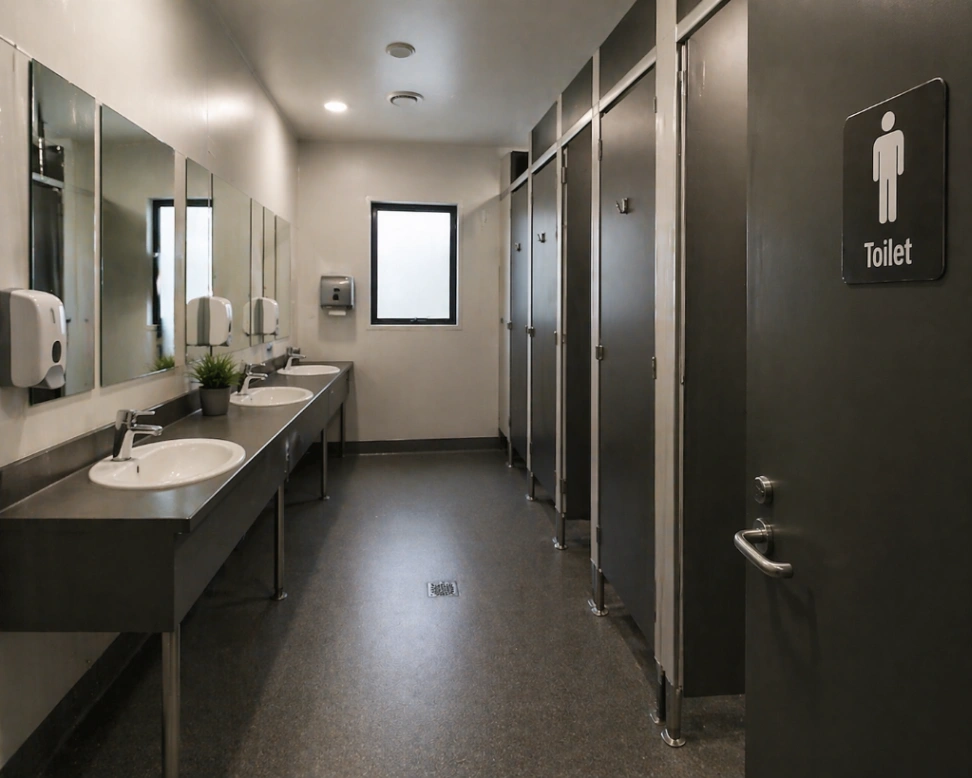
Bathrooms and washrooms introduce another combination of surfaces and cleaning requirements. Floors, ceramic tile, fixtures, glass and other surfaces may sit within a relatively small area, while the cleaning tasks themselves can range from general cleaning through to the removal of soap residue and other build-up.
Product selection should reflect those individual tasks. Depending on the facility and cleaning scope, there may also be requirements relating to hygiene or disinfection that differ from ordinary surface cleaning. Cleaning and disinfection are not automatically the same process, and products should be selected and used according to their intended purpose and directions.
The same principle applies to other shared areas. Kitchens, crib rooms and staff amenities can contain several surfaces within one space, which makes a single-product approach increasingly impractical.
For businesses managing regular cleaning across these environments, an effective cleaning program needs to consider the requirements of individual areas rather than treating the entire workplace as one uniform cleaning task.
The Cleaning Product Is Only Part of the Result
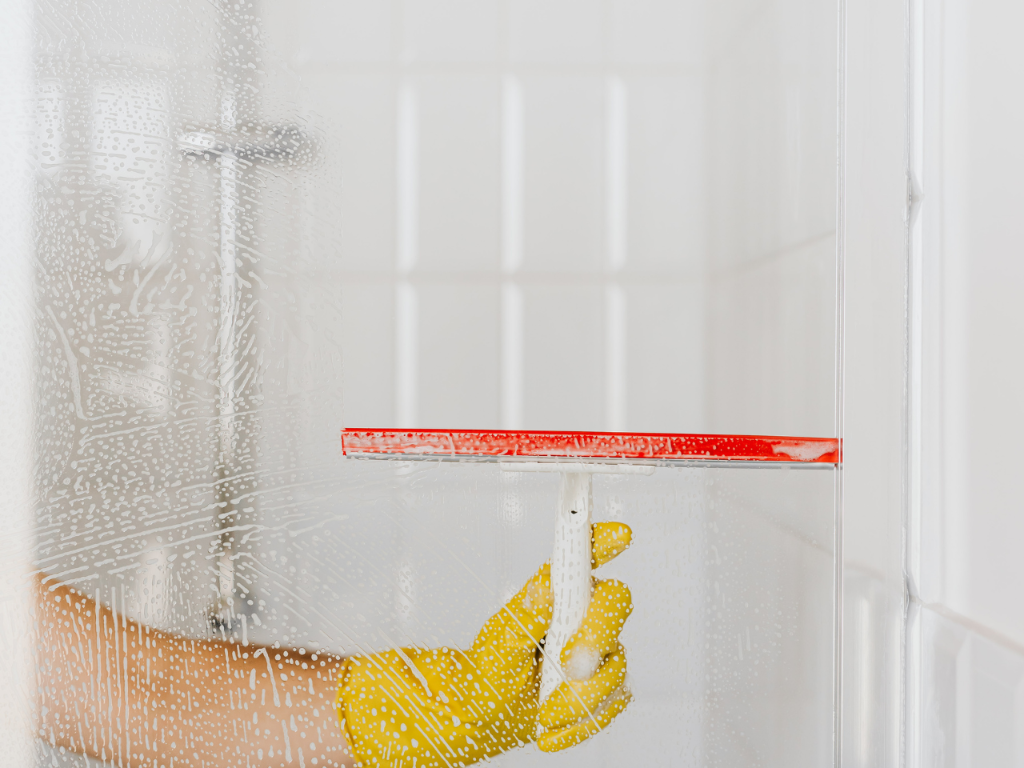
Choosing the right cleaning products is important, but professional cleaning depends on more than chemical selection.
Frequency, method, equipment, cleaning scope and consistency all influence the condition of a commercial facility. The correct detergent will not compensate for an area being cleaned less frequently than its level of use requires. Likewise, regular cleaning cannot always resolve accumulated build-up that has reached the point where deeper cleaning is appropriate.
This is why buying the same products used by professional cleaners does not necessarily produce the same cleaning program. The product is one component of a broader process that determines what needs to be cleaned, how frequently it should be addressed and what method is appropriate.
A commercial cleaner also needs to recognise when changing the product is unlikely to solve the underlying issue. Repeatedly applying stronger cleaning agents to a surface that is worn, damaged or otherwise in need of maintenance does not address its physical condition.
The objective is not to find the strongest possible cleaner. It is to determine what the facility actually requires and apply the appropriate cleaning or maintenance response.
Professional Commercial Cleaning Should Reflect the Facility
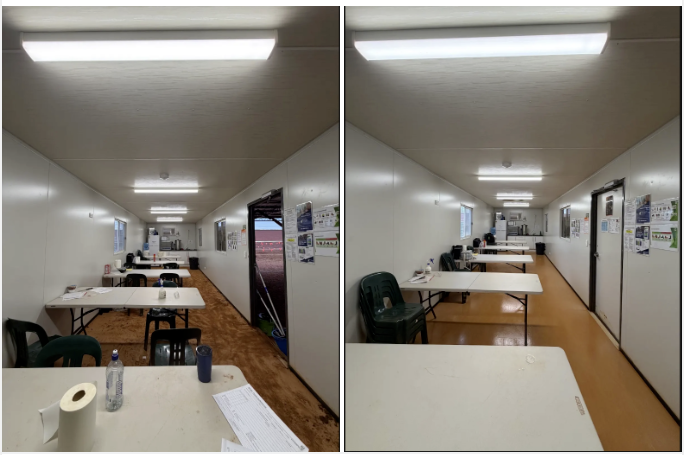
There is no universal collection of essential cleaning products that will suit every commercial facility. An office does not necessarily have the same requirements as a mine site, industrial facility or workplace with heavily used shared amenities.
The cleaning products and methods used should reflect the surfaces present, how different areas are used and the cleaning tasks included within the service. Those requirements can also change over time. Regular cleaning may be sufficient for an area most of the year, while periodic deep cleaning may be needed to address work outside the normal scope.
This is where professional cleaning services should provide more than labour. Product knowledge, appropriate cleaning methods and a cleaning scope suited to the facility all contribute to effective service delivery.
For clients, the practical outcome is a cleaning program built around the facility rather than a generic checklist supported by the same handful of products everywhere.
Commercial Cleaning Products and Services From MCD Group
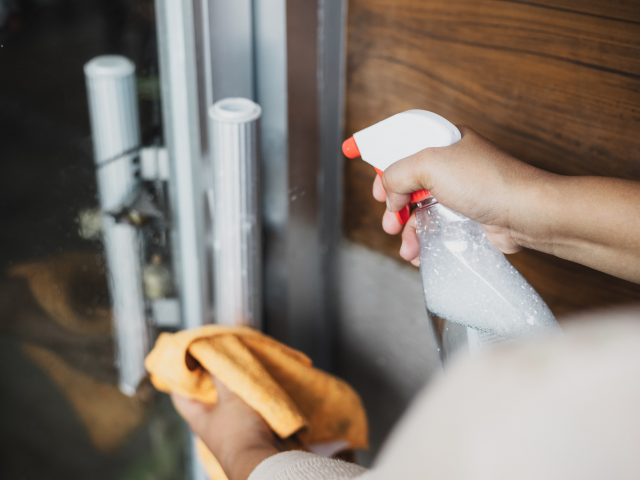
MCD Group provides commercial cleaning across Kalgoorlie-Boulder and the Goldfields, including cleaning support for commercial, industrial and mine site environments. Services include regular commercial cleaning and more intensive deep cleaning where additional attention is required.
MCD also supplies a range of commercial cleaning products, including products for floor care, washrooms, glass, stainless steel and more specialised cleaning applications. This product range reflects the same principle applied throughout professional commercial cleaning: different jobs can require different products, methods and levels of cleaning.
Businesses looking for commercial cleaning support can contact MCD Group online or call 0480 020 821 to discuss the requirements of their facility.
Frequently Asked Questions
Can You Use the Same Cleaner on Every Surface?
No single cleaner should be assumed to be suitable for every surface. Cleaning products have different intended applications, and surface compatibility and manufacturer directions should be checked before use. Commercial facilities often require several products because they contain different surfaces and different types of cleaning requirements.
Are Commercial Cleaning Products Stronger Than Household Cleaners?
Not necessarily. The more useful distinction is what the product is formulated to do. Professional cleaners select cleaning agents according to their intended application, the surface being cleaned and the type of dirt, residue or build-up that needs to be addressed.
Why Do Professional Cleaners Carry So Many Different Products?
Professional cleaners can work across floors, carpets, glass, stainless steel, bathrooms, washrooms and other surfaces within a single facility. Carrying different products allows the cleaner to select an appropriate product for each task rather than relying on one general-purpose cleaner for everything.
Does Every Commercial Facility Need the Same Cleaning Products?
No. Product requirements depend on the surfaces within the facility, how the space is used and the cleaning scope. An office, industrial facility and mine site can each present different cleaning requirements, which is why commercial cleaning should be planned around the individual facility.
Good Commercial Cleaning Starts With the Right Approach
The range of cleaning products used by professional cleaners is not simply a larger version of the household cleaning cupboard. Each product has a purpose, and selecting the appropriate product requires an understanding of the surface, the cleaning problem and the method required.
The same principle applies to the broader cleaning service. Some areas need regular cleaning, others periodically require deeper attention, and some problems cannot be resolved through cleaning at all.
Understanding those distinctions is part of delivering commercial cleaning that is appropriate for the facility, rather than applying the same product and process to every surface.