FIFO Shower Cleaning: Why Shared Bathrooms Need More Than a Visual Clean
FIFO shower cleaning needs to account for more than whether a bathroom looks clean when someone walks through the door. In workers' accommodation, showers and shared bathrooms can be used repeatedly by different people, making the cleaning standard particularly important in these communal wet areas.
A visibly clean floor or shower screen is only one part of that standard. Regular cleaning also needs to consider the different surfaces within the bathroom, areas where soap scum and other build-up can accumulate, the cleaning products and methods being used, and whether some issues require deeper cleaning or maintenance.
For facilities teams managing FIFO accommodation, the better question is not simply whether the bathroom has been cleaned. It is whether the cleaning scope reflects how the facility is actually being used.
A Clean-Looking Shower Doesn't Tell You Everything
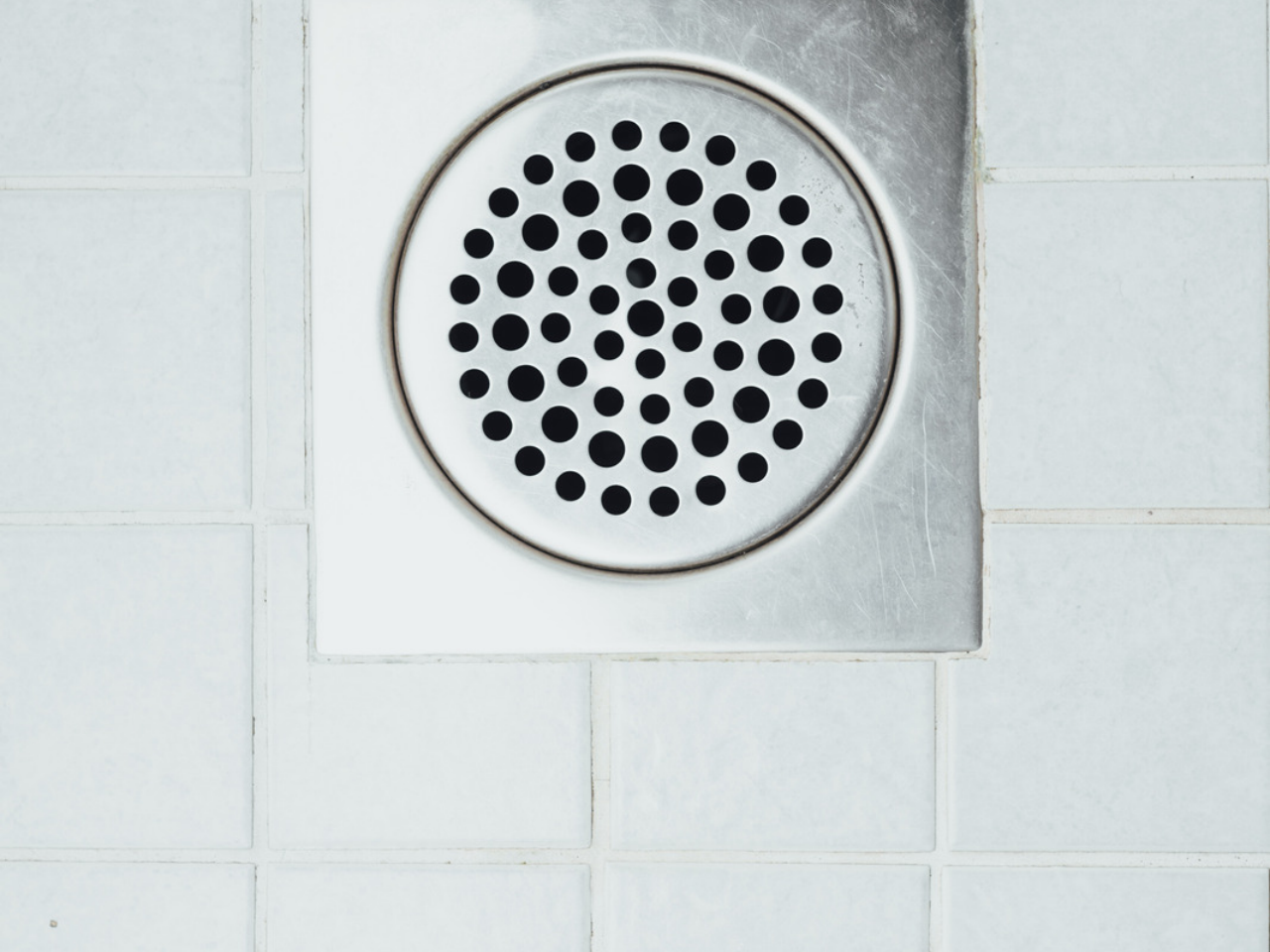
Visual presentation is an important part of bathroom cleaning, but it does not describe the entire job.
A shower may look presentable from the doorway while residue remains around edges, tracks, fixtures or grout lines. Shower glass may be free from obvious marks while other parts of the wet area require attention. A freshly cleaned floor also does not tell a facility manager how consistently the area is being serviced across days, room changeovers or periods of heavier use.
This is one reason a FIFO shower cleaning standard should define more than an expected appearance.
The cleaning method needs to reflect the surfaces present and what is being removed. General dirt, soap scum and more persistent build-up do not necessarily require the same approach. Different materials within the bathroom may also have their own product and cleaning requirements.
Frequency matters as well, but there is no useful universal rule that every FIFO bathroom should receive the same daily cleaning or weekly clean. An appropriate cleaning schedule should reflect factors such as whether facilities are private or shared, the number of occupants using them and the requirements of the individual accommodation facility.
The objective is a repeatable cleaning standard appropriate to the bathroom, rather than relying only on whether the area passes a quick visual check.
Why Shared FIFO Bathrooms Need Particular Attention
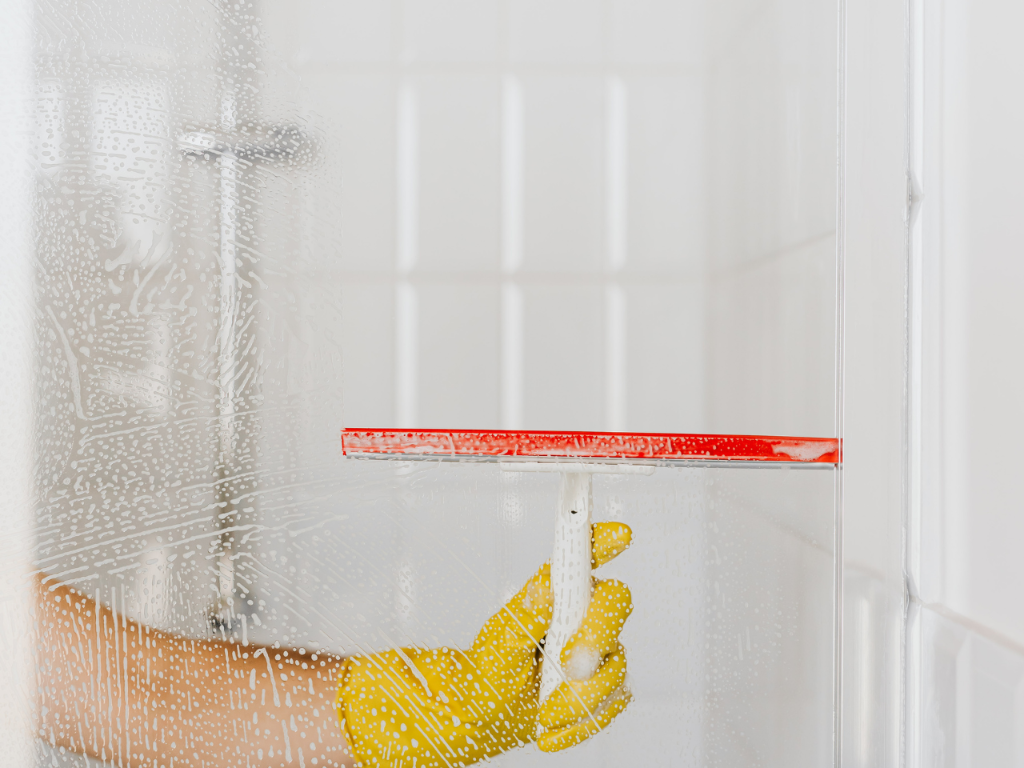
Shared wet areas deserve particular consideration because of how they are used.
FIFO workers may be sharing showers, toilet facilities and other bathroom areas with a rotating workforce. Unlike a private bathroom at home, the facility is being used by multiple occupants as part of a wider accommodation operation.
There is also a genuine health reason to take communal shower environments seriously.
Healthdirect Australia identifies communal showers and changing rooms among the places where tinea can spread. The fungus can remain on shower floors and pass from one person's feet to another, and Healthdirect recommends precautions such as wearing thongs in communal showers.
That does not mean a case of tinea among FIFO workers can automatically be attributed to inadequate accommodation cleaning. People can encounter fungal infections in different environments, and personal precautions remain important.
What it does demonstrate is why shared shower floors should not be treated purely as a presentation issue.
For facilities teams, maintaining shared bathrooms is part of providing an accommodation environment that workers can use with confidence. The cleaning program cannot remove every possible health risk, but it can ensure that communal wet areas are being serviced according to an appropriate and clearly defined standard.
This distinction is important. Professional cleaners should not be making medical guarantees about a bathroom. Their role is to carry out the agreed cleaning process properly and consistently.
Shower Floors Are Only One Part of the Cleaning Area
The floor is an obvious focus when cleaning a shared shower, but a complete bathroom cleaning scope usually needs to consider much more than the area directly underfoot.
Depending on the design of the facility and agreed service, this can include shower glass or screens, tiled walls, grout lines, fixtures, edges and tracks, basins, vanity surfaces, adjacent floors and toilet areas.
These surfaces do not all accumulate the same type of dirt or residue.
Water and soap can leave build-up on shower surfaces. Grout lines and edges can require different attention from broad tiled surfaces. Glass presents a different cleaning task again, while fixtures need to be cleaned using products and methods appropriate to their material.
Small areas can also affect the overall result disproportionately. Cleaning the centre of a shower floor while repeatedly overlooking edges, tracks or corners can leave the bathroom looking unfinished even when the main surfaces have been serviced.
The same principle applies outside the shower itself. If the bathroom includes a toilet, basin and vanity, the cleaning scope needs to make clear which areas are included rather than treating "clean bathroom" as a sufficiently detailed instruction.
This level of definition becomes more important when a cleaning standard needs to be maintained across multiple accommodation rooms or shared bathroom facilities. What appears to be a minor ambiguity in one room can become a repeated omission when the same scope is applied across an entire FIFO camp.
Soap Scum, Grout and General Dirt Don't Always Need the Same Approach
One of the problems with treating bathroom cleaning as a single task is that the surfaces may look similar while the cleaning requirements are different.
Loose dirt on a floor, soap scum on shower surfaces, marks on glass and accumulated residue around grout are not necessarily addressed using the same cleaning product or method.
Product selection should therefore start with what is being cleaned and what needs to be removed.
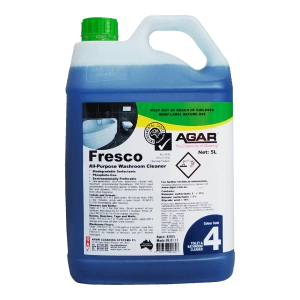
For example, AGAR Fresco, available through MCD Group, is formulated for applications including washrooms, showers, toilets and ceramic tiled areas. Its specified uses include cleaning soap scum and organic build-up, making it an example of a commercial cleaning product designed around particular bathroom cleaning requirements.
That does not mean one washroom product should automatically be used on every material within a FIFO bathroom. Shower glass, fixtures, flooring and other surfaces still need to be considered according to their material and the product manufacturer's directions.
This is an important part of professional cleaning. The objective is not to find the strongest chemical available or use more product when an area is difficult to clean. It is to identify the surface and cleaning problem, then use an appropriate product, method and cleaning equipment.
MCD Group explores this in more detail in Why Do Commercial Cleaners Use Different Cleaning Products for Different Surfaces?
Regular Cleaning and Periodic Deep Cleaning Have Different Jobs
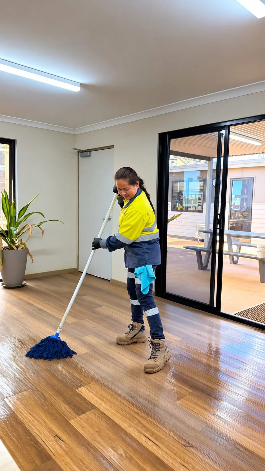
Even a well-designed regular cleaning schedule does not mean every bathroom task needs to be completed to the same intensity during every service.
Routine FIFO cleaning is there to manage recurring requirements and maintain the agreed standard. Periodic deep cleaning provides an opportunity to address more intensive work that sits outside the normal housekeeping scope.
The distinction becomes useful where build-up develops in areas that require more attention than routine servicing reasonably provides. Simply increasing the amount of cleaning product used during a regular service is not necessarily the appropriate response.
At the same time, deep cleaning should not become a substitute for a routine cleaning schedule that is failing to keep up with the way a shared bathroom is used.
The appropriate balance will depend on the facility, occupancy, surfaces and agreed cleaning requirements. What matters is that routine and periodic cleaning have clearly understood roles within the broader FIFO accommodation cleaning program.
For a facilities team, that creates a more useful standard than treating every bathroom clean as an identical set of steps.
The Cleaning Method Also Has to Consider the Cleaner
Shared bathroom cleaning can involve repetitive work in a relatively confined wet area. Reaching into shower corners, working around fixtures and cleaning lower surfaces can require bending, reaching and working on floors that may become slippery during the cleaning process.
This means the cleaning method needs to consider more than the finished result.
WorkSafe WA guidance for the accommodation industry has identified issues such as awkward postures, reaching and slippery surfaces in bathroom and shower cleaning. Suitable cleaning equipment can help reduce unnecessary physical strain while allowing cleaners to reach edges, walls and other parts of the shower effectively.
The specific equipment will depend on the facility and task, but professional cleaning should consider how the work can be completed appropriately rather than relying on the same cloth, brush or tool for every bathroom surface.
Cleaning products also need to be used according to their directions. More chemical, longer application or a more aggressive cleaning method should not be assumed to produce a better result.
For FIFO accommodation, these considerations matter because the cleaning process needs to be repeatable. A method that works for a one-off bathroom clean is not necessarily the best approach for cleaning staff servicing multiple rooms or shared facilities as part of an ongoing camp cleaning schedule.
When a FIFO Bathroom Problem Isn't a Cleaning Problem
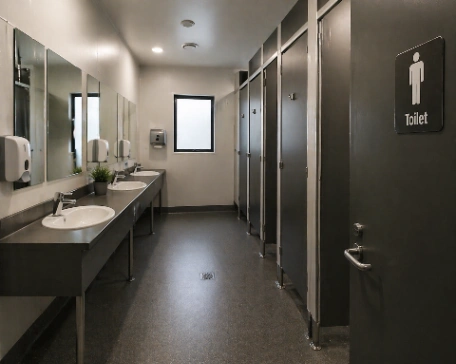
Not every issue noticed in a shower can be resolved through additional cleaning.
Grout is a good example. Surface dirt and build-up may respond to appropriate cleaning, but damaged or deteriorated grout is a physical condition issue. The same distinction can apply to sealant, fixtures, shower screens, flooring and other components within the bathroom.
A cleaner may also encounter a fixture that is loose or damaged, a surface that has deteriorated, or an area where the physical condition continues to affect how the bathroom presents after cleaning.
In these situations, repeatedly increasing the intensity of the clean does not address the underlying problem.
A useful FIFO bathroom cleaning scope should therefore recognise the boundary between cleaning and maintenance. Cleaning addresses the condition of appropriate surfaces within the agreed service. Physical deterioration, damage or faults may need to be referred for maintenance or specialist assessment.
This is particularly relevant in accommodation facilities that are used continuously. Regular cleaning creates repeated opportunities for visible changes in the condition of rooms and shared areas to be noticed, even though cleaners are not acting as formal building inspectors.
MCD Group provides both commercial cleaning and practical building maintenance services across the Goldfields. Where a bathroom issue has moved beyond what cleaning can reasonably address, recognising that distinction helps direct the problem toward the appropriate response.
What Should a FIFO Shower Cleaning Scope Actually Define?
A useful shower cleaning scope should be specific enough that "clean the bathroom" does not have to be interpreted differently from one room or cleaner to the next.
The exact requirements will depend on the accommodation facility, bathroom design, occupancy and agreed service. However, the scope can establish how the main areas are treated and which requirements sit outside routine cleaning.
|
Area |
What the cleaning scope should consider |
|
Shower floors |
Routine cleaning requirements, floor material, level of use and appropriate cleaning method |
|
Shower glass and screens |
Marks, soap residue and other included surface cleaning requirements |
|
Tiled walls |
Routine surface cleaning and any periodic attention required for accumulated build-up |
|
Grout lines |
Cleaning requirements where appropriate and recognition of physical deterioration that may require maintenance |
|
Edges, corners and tracks |
Areas that can be missed when cleaning focuses only on larger visible surfaces |
|
Fixtures and fittings |
Appropriate surface cleaning based on the material and product directions |
|
Basin and vanity |
Included surfaces and expected routine cleaning standard |
|
Toilet facilities |
Tasks included where toilets form part of the bathroom or shared amenity |
|
Adjacent floors |
Cleaning requirements associated with foot traffic and use of the wet area |
|
Periodic deep cleaning |
Tasks requiring more intensive attention outside the regular cleaning schedule |
|
Maintenance issues |
How visible damage or physical problems outside the cleaning scope are handled |
The purpose of this level of detail is not to create an unnecessarily complicated checklist. It is to reduce ambiguity.
For example, if grout requires periodic deeper attention, that can be separated from the regular clean. If shower tracks are included, cleaners know they form part of the expected standard rather than being addressed only when visibly dirty. If damaged fixtures fall outside the cleaning scope, there can be a clear pathway for dealing with them.
This becomes particularly valuable when the same standard needs to be maintained across numerous accommodation rooms or shared bathroom areas.
Shared Bathroom Cleaning Is Part of a Larger FIFO Accommodation Standard
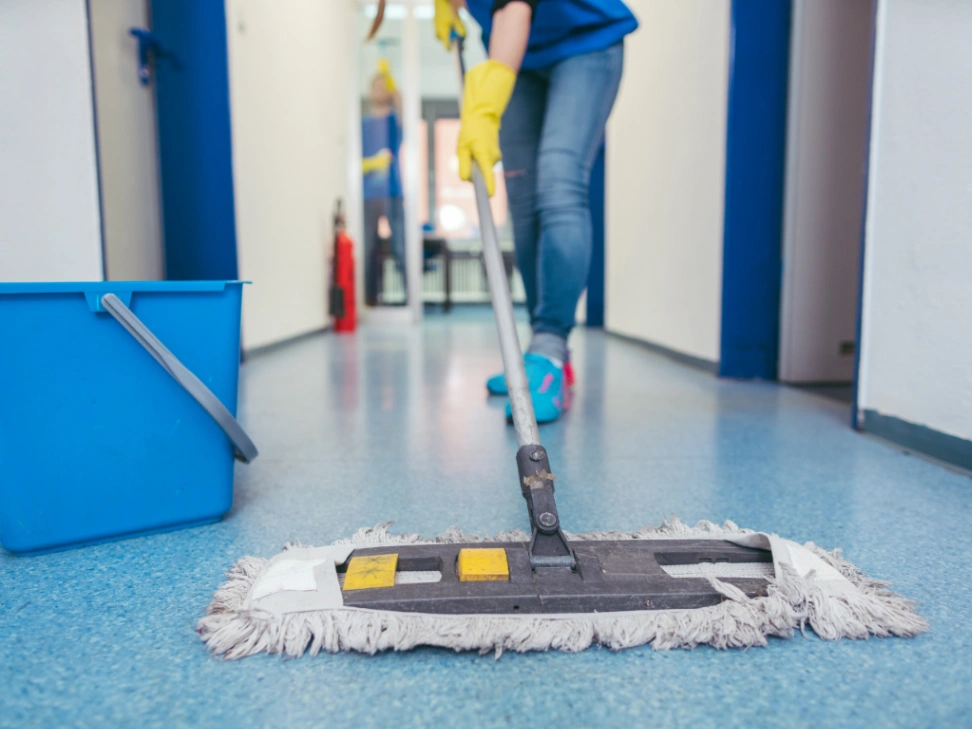
A shower does not operate independently from the rest of a FIFO accommodation facility.
Workers move between bedrooms, bathrooms, laundry facilities, dining or crib areas and other shared spaces. Each area has its own cleaning requirements, but together they contribute to the condition of the accommodation environment.
For facilities teams, this means shower cleaning should form part of the wider FIFO accommodation cleaning program rather than being managed as an isolated task.
The broader scope may include routine room cleaning, room changeovers, shared amenities, periodic deep cleaning and common areas. Commercial laundry can also form part of the accommodation operation where linen and towels are being serviced.
MCD Group provides commercial and mine site cleaning across Kalgoorlie-Boulder and the Goldfields, alongside commercial laundry, deep cleaning and practical building maintenance services. These remain different service requirements, but they can exist alongside one another within the same FIFO camp.
For a more complete look at how those requirements fit together, see FIFO Accommodation Cleaning Standards: What Should Be Included?
Questions About FIFO Shower Cleaning
How Often Should Showers in FIFO Accommodation Be Cleaned?
There is no single cleaning frequency appropriate to every FIFO bathroom.
The schedule should reflect factors such as whether the shower is private or shared, how many people use the facility, patterns of occupancy and the cleaning requirements established for the site.
A heavily used shared bathroom may have different servicing requirements from an ensuite attached to an individual accommodation room. Periodic deep cleaning may also sit alongside the regular cleaning schedule.
Is a Visually Clean Shower Necessarily Hygienically Clean?
Appearance alone does not describe the cleaning process that has been completed.
A shower can appear clean from a distance while areas such as grout lines, edges, tracks or other surfaces still require attention. Conversely, staining or physical deterioration may remain even after appropriate cleaning has taken place.
A useful standard therefore considers both the cleaning process and the condition of the surfaces rather than relying solely on a quick visual assessment.
Can Regular Cleaning Remove Soap Scum and Build-Up From Grout?
Regular cleaning can help manage recurring surface dirt and residue, but more established build-up may require a different product, method or periodic deeper cleaning.
The appropriate approach depends on what needs to be removed and the surface being treated. Cleaning products should be selected and used according to their intended applications and manufacturer directions.
Where grout itself is damaged or deteriorated, further cleaning will not repair it.
Can Professional Cleaning Prevent Tinea in Shared Showers?
Professional cleaning is one part of maintaining shared bathroom facilities, but it would not be appropriate to claim that cleaning can guarantee workers will not contract tinea.
Healthdirect Australia identifies communal showers as one environment where tinea can spread and recommends individual precautions such as wearing thongs in communal showers.
For accommodation operators, the practical focus should remain on maintaining an appropriate and consistent cleaning standard for shared wet areas rather than making guarantees about individual health outcomes.
A Shared Shower Should Be Managed as a Shared Facility
FIFO shower cleaning should not be reduced to whether the floor has been mopped or the shower looks presentable from the doorway.
These are repeatedly used wet areas containing different surfaces, residues and cleaning requirements. Maintaining them properly means considering the entire shower and bathroom, selecting appropriate cleaning products and methods, distinguishing routine work from periodic deep cleaning, and recognising when a physical problem requires maintenance instead.
For FIFO accommodation, that standard also needs to be repeatable across changing occupants and multiple rooms or shared facilities.
A well-defined cleaning scope gives facilities teams and cleaners a clearer understanding of what is expected, while helping ensure that the condition of shared bathrooms receives the attention appropriate to the way they are actually used.
MCD Group provides FIFO accommodation and mine site cleaning support across Kalgoorlie-Boulder and the Goldfields. To discuss cleaning requirements for accommodation rooms, shared bathrooms or other mine site facilities, contact MCD Group online or call 0480 020 821.