What Does a Commercial Cleaner Do? Services, Tasks and What's Included
What does a commercial cleaner do? A commercial cleaner looks after the cleanliness and general presentation of workplaces, including offices, commercial buildings, shared facilities and mine-site amenities. Their work can involve vacuuming, mopping, cleaning bathrooms, wiping surfaces, removing waste and maintaining frequently used areas.
However, not every commercial cleaner performs the same tasks. The services required for a small office in Kalgoorlie can be very different from those needed at a busy mine-site crib room or industrial facility.
Understanding what commercial cleaning includes, and what needs to be arranged separately, can help businesses choose a service that suits how their facility actually operates.
What Is a Commercial Cleaner, and How Is It Different From Domestic Cleaning?
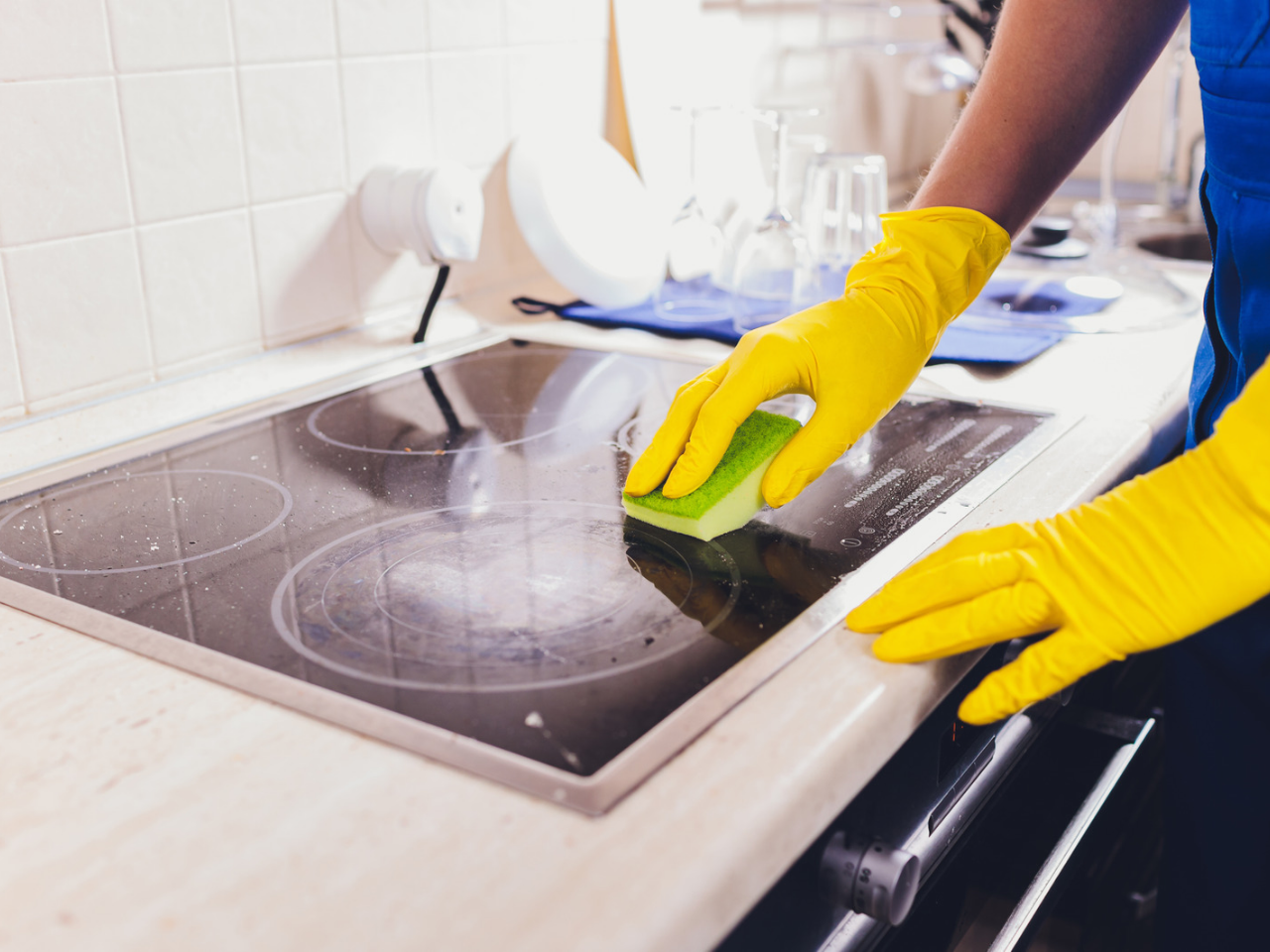
A commercial cleaner is someone who provides cleaning services in workplaces and other business facilities rather than private homes.
While domestic cleaning and commercial cleaning share many basic tasks, commercial environments often involve different requirements. A workplace may have larger floor areas, shared amenities, multiple shifts, restricted access times or equipment that requires particular care.
For example, cleaning a residential kitchen is different from maintaining a crib room used by workers throughout the day. Both involve benches, sinks and floors, but the number of people using the space and the way it is used can change the cleaning requirements.
Commercial cleaners also work within an agreed service scope. This outlines which areas are cleaned, what tasks are performed and how frequently the work takes place.
For businesses, that scope matters more than the job title alone.
What Cleaning Tasks Are Usually Included in Commercial Cleaning Services?
Most commercial cleaning services cover a combination of floors, surfaces, bathrooms, shared spaces and waste removal. The exact duties depend on the building, its occupants and the agreement with the cleaning provider.
The table below shows common tasks that may form part of a commercial cleaning arrangement.
|
Area |
Common cleaning tasks |
|
Floors |
Vacuuming carpets, mopping hard floors and removing accessible surface dirt |
|
Offices and workspaces |
Dusting furniture, wiping accessible surfaces and cleaning shared work areas |
|
Bathrooms |
Cleaning toilets, sinks, mirrors, fixtures and surrounding surfaces |
|
Kitchens and crib rooms |
Cleaning benches, tables, sinks, floors and agreed shared surfaces |
|
Waste areas |
Emptying designated bins, replacing liners and cleaning bin surrounds where included |
|
Entrances and shared areas |
Cleaning entry floors, accessible glass, doors and frequently touched surfaces |
|
Meeting rooms |
Cleaning tables, accessible furniture and floors |
These tasks may sound straightforward, but the amount of work involved can vary considerably.
A bathroom used by a handful of office employees will generally have different cleaning demands from amenities shared by a large workforce across multiple shifts.
The same applies to floors. A carpeted office may need routine vacuuming, while a heavily used entrance could require more frequent attention because of dust and dirt being carried inside.
The important question isn't simply whether a commercial cleaner cleans bathrooms or floors. It's what level of cleaning those areas require and how often the work needs to happen.
What Doesn't a Commercial Cleaner Automatically Do?
One of the most common misunderstandings about commercial cleaning is assuming that every cleaning-related task is included in the regular service.
A standard cleaning agreement may cover everyday tasks without automatically including more involved work.
Depending on the provider and the facility, additional services might include:
- Carpet cleaning beyond routine vacuuming.
- Periodic deep cleaning of kitchens, bathrooms or other shared areas.
- Detailed window cleaning beyond accessible glass and spot cleaning.
- Intensive floor cleaning or floor restoration.
- Cleaning following construction, refurbishment or a commercial tenancy handover.
- Specialist industrial cleaning that requires particular equipment, training or site arrangements.
MCD Group also provides construction cleaning services, but these are typically scoped and scheduled separately from routine commercial cleaning, as the work involved, site conditions and cleaning requirements can be quite different.
Even when a commercial cleaning company offers these services, they may need to be quoted and scheduled separately.
This is particularly important for businesses comparing cleaning proposals. Two companies may both offer commercial cleaning, but one quote might include periodic floor care while the other covers only routine mopping.
Neither arrangement is necessarily wrong. The issue is whether the business understands what it is paying for.
A clearly defined scope helps prevent disagreements about tasks that were never included in the first place.
Routine Cleaning Is Only One Part of Maintaining a Commercial Facility
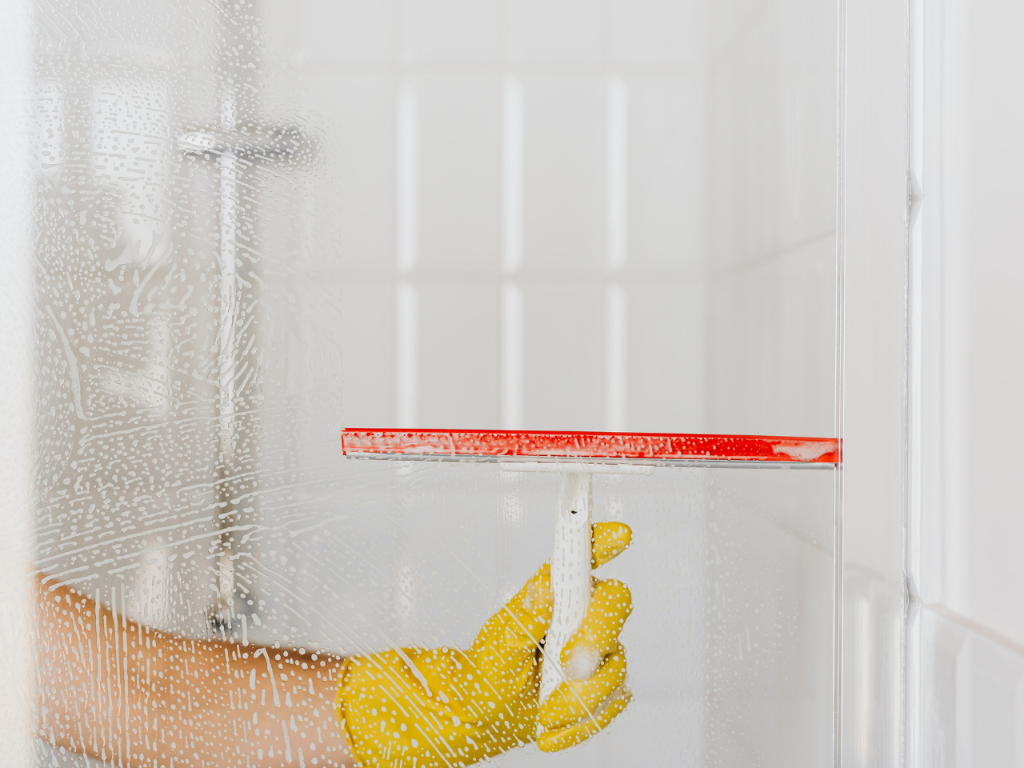
Regular cleaning and deep cleaning serve different purposes.
Routine cleaning deals with the everyday dirt, waste and surface build-up associated with using a workplace. It helps maintain the condition and presentation of areas that employees, contractors and visitors use regularly.
Deep cleaning involves more detailed attention to areas or surfaces that routine cleaning may not adequately address.
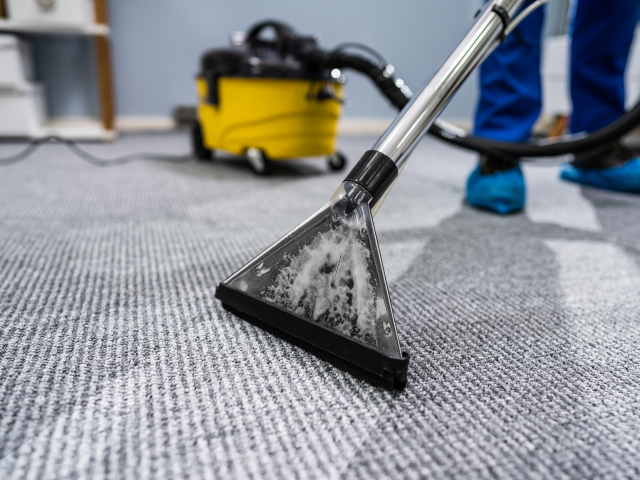
For example, regular office cleaning might include vacuuming carpets and mopping floors. Periodic work could involve carpet extraction cleaning or more intensive attention to flooring, depending on its condition and the material involved.
Similarly, routine cleaning in a shared bathroom may address visible dirt and frequently used surfaces, while periodic deep cleaning may focus on more stubborn build-up around fixtures, edges and other difficult-to-reach areas.
These services work together, but they shouldn't be treated as interchangeable.
A sensible cleaning plan considers what needs attention every visit, what can be scheduled periodically and what may require a separate assessment.
Why Commercial Cleaning Looks Different Across Offices, Mine Sites and Industrial Facilities
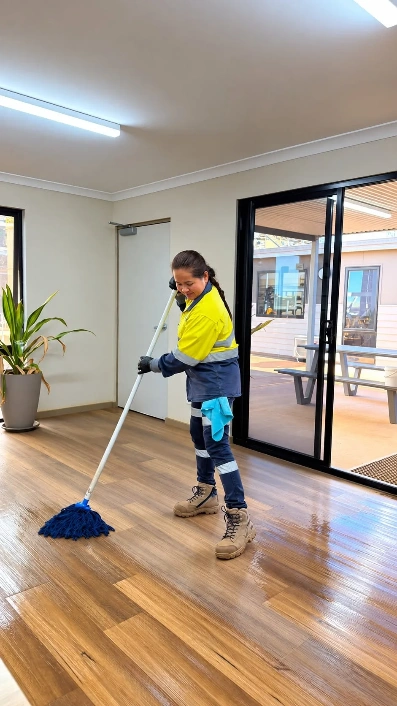
Commercial cleaning is not a single checklist that works equally well in every building.
Commercial offices may prioritise workstations, meeting rooms, bathrooms, kitchens and entrances. Cleaning arrangements often need to account for staff working hours and access to occupied spaces.
Mine-site facilities can have different requirements because of shift patterns, workforce numbers and the repeated use of shared amenities. Crib rooms, offices, bathrooms and accommodation facilities may each need their own cleaning arrangements.
Industrial facilities may involve greater exposure to dust, dirt and operational activity. Cleaning needs to be planned around the areas being serviced, the surfaces involved and any site access or safety requirements. Specialist industrial tasks should be assessed separately rather than assumed to be part of general cleaning.
In Kalgoorlie-Boulder and the wider Goldfields, these differences are especially relevant because commercial businesses and mining operations often have very different working environments.
A good commercial cleaning scope starts with how the facility is used, not simply how large it is.
How Do Commercial Cleaners Choose Their Cleaning Products and Equipment?
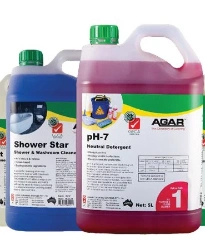
Different surfaces need different cleaning methods. A product suited to a tiled bathroom floor may not be appropriate for carpet, painted walls or stainless steel.
Professional cleaners consider the surface, type of dirt and cleaning task before choosing products and equipment. This might involve a vacuum cleaner for carpeted offices, suitable cleaning solutions for bathroom fixtures or different methods for maintaining hard floors.
Using a stronger chemical isn't always the answer. The wrong product can damage a surface or create unnecessary work.
This is particularly relevant in commercial buildings with a mixture of flooring, fixtures and shared facilities.
For a closer look, read our article on Why Commercial Cleaners Use Different Cleaning Products for Different Surfaces.
A Cleaning Schedule Can Look Good on Paper and Still Fall Short
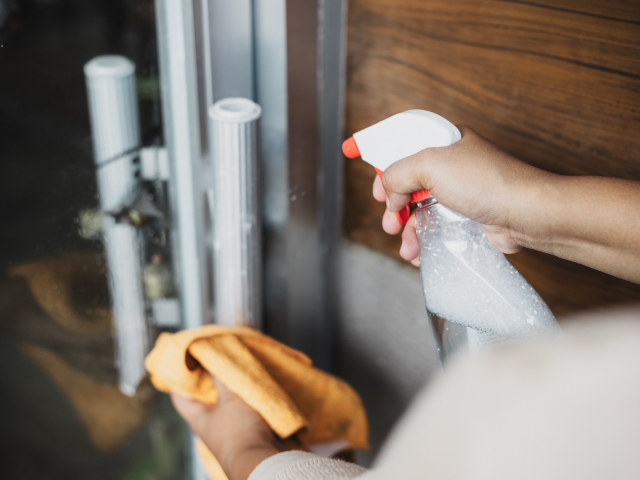
How often should a commercial cleaner attend? There isn't one schedule that suits every workplace.
An office with a small team may have different requirements from a facility operating across several shifts. Bathrooms, entrances and shared kitchens may also need attention more frequently than meeting rooms or less-used spaces.
When planning a cleaning schedule, businesses should consider:
- How many people use the building each day.
- Which areas receive the most traffic.
- Whether the facility operates outside standard business hours.
- How quickly dust, dirt and waste accumulate.
- Which tasks need regular attention and which can be scheduled periodically.
A schedule should reflect actual building use rather than simply repeating the same tasks at every visit.
What Should a Business Expect From an Ongoing Commercial Cleaning Contract?
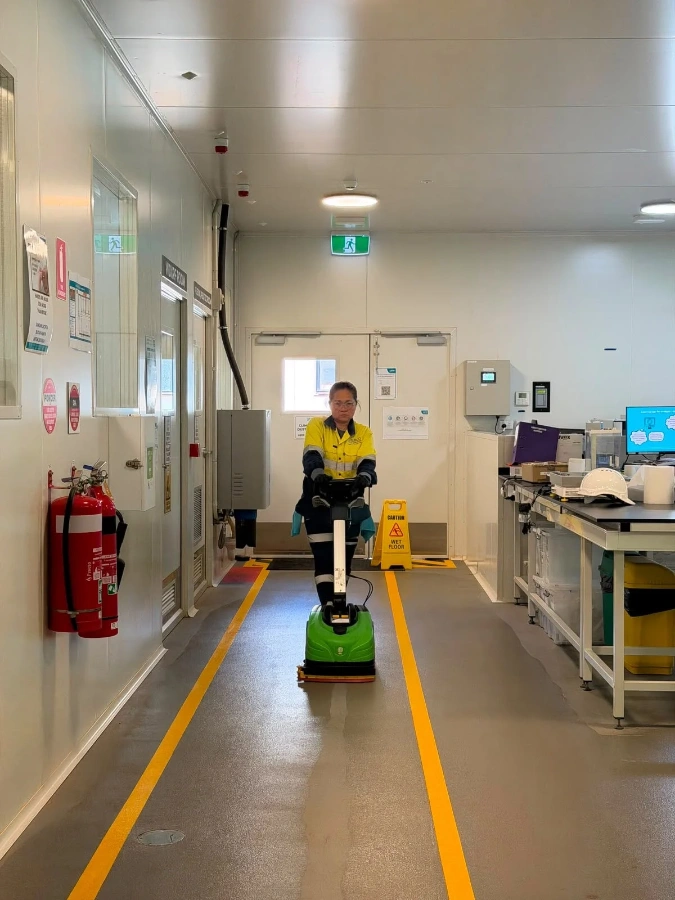
Commercial cleaning companies can provide similar services while offering very different arrangements.
Before engaging a provider, businesses should understand exactly what the proposed contract covers.
A useful cleaning scope should identify the areas being serviced, the tasks included, attendance frequency and any periodic work. It should also explain how additional cleaning requests or changes to the facility will be handled.
For businesses managing multiple locations, consistency becomes particularly important. A cleaning arrangement needs to account for differences between buildings without leaving managers uncertain about what is being completed.
The aim isn't to create the longest possible list of cleaning duties. It's to establish a practical agreement that matches the facility's requirements and can be reviewed when those requirements change.
When More Cleaning Won't Fix the Problem
Not every issue with a commercial floor can be resolved through additional mopping or deep cleaning.
Over time, flooring can become worn, damaged or difficult to maintain through routine cleaning alone. In those situations, the problem may be the condition of the surface rather than the cleaning method.
MCD Group encountered this distinction during a mine-site crib room floor refresh.
The existing floor required more than routine cleaning, so the project focused on refreshing the floor surface itself.
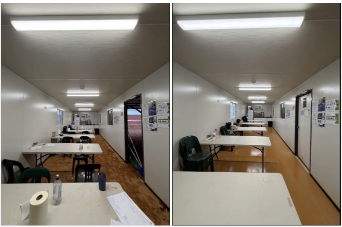
Before and after: MCD Group's mine-site crib room floor refresh, showing the difference between routine cleaning and work needed to improve the condition of the flooring.
The project demonstrates why it is important to recognise when a cleaning concern has become a maintenance issue.
Rather than repeatedly cleaning a surface that needs further attention, the more practical approach may be to assess the floor and determine what work is appropriate.
Read the full project: Crib Room Floor Refresh: Before and After.
Commercial Cleaning Services in Kalgoorlie and the Goldfields

MCD Group provides commercial cleaning and facility support for businesses operating in Kalgoorlie-Boulder and the wider Goldfields.
Our services include commercial cleaning, mine-site cleaning, deep cleaning, commercial laundry and building maintenance.
Whether a business needs regular office cleaning, support with shared mine-site facilities or assistance reviewing its cleaning requirements, the starting point is understanding the building and how it operates.
Businesses in Kalgoorlie, Boulder and surrounding Goldfields communities can contact MCD to discuss their requirements. Regional service arrangements depend on the location and scope of work.
Need commercial cleaning services for your facility?
Contact MCD Group online or call 0480 020 821 to discuss your cleaning requirements.
Frequently Asked Questions About Commercial Cleaners
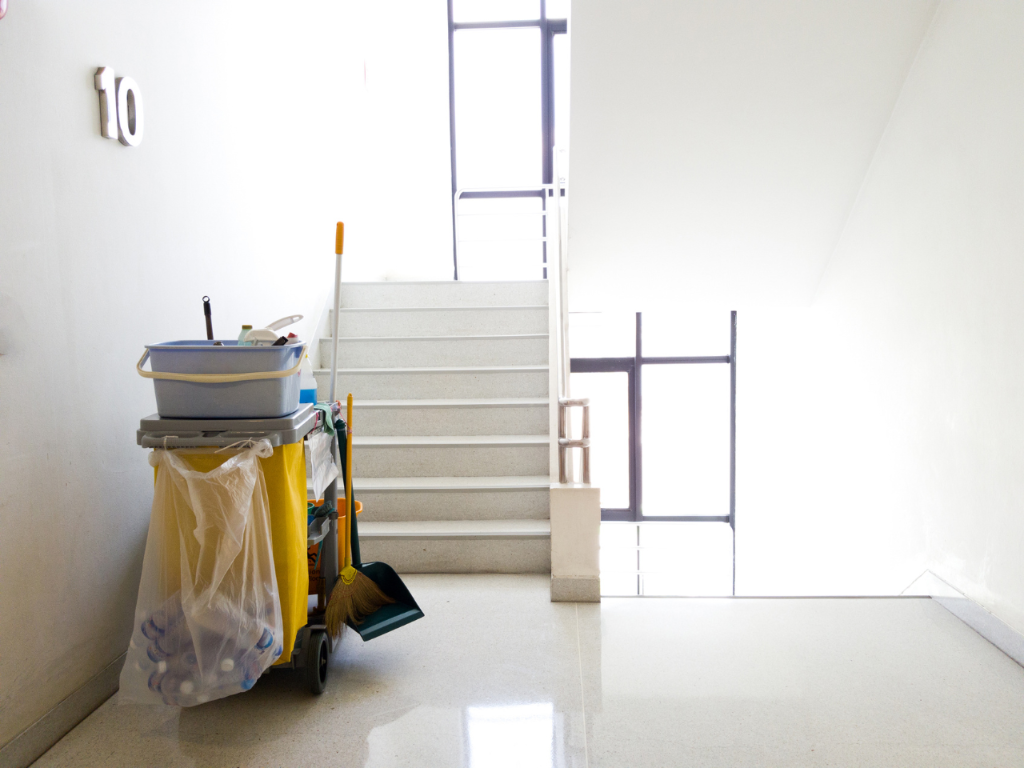
Do commercial cleaners provide their own cleaning supplies?
Many commercial cleaning arrangements include products and equipment supplied by the provider, but this should be confirmed before work begins. Consumables such as toilet paper, hand soap and bin liners may be handled differently depending on the agreement.
Is deep cleaning included in regular commercial cleaning?
Not necessarily. Regular cleaning generally covers scheduled everyday tasks, while deep cleaning may involve additional work, equipment or time. The contract should identify whether periodic deep cleaning is included or quoted separately.
Can commercial cleaners clean mine-site facilities?
Yes, commercial cleaning can include mine-site offices, crib rooms, bathrooms and accommodation facilities. However, the cleaning scope needs to reflect the site's operating conditions, access requirements and the areas being serviced.
How often should a commercial workplace be cleaned?
Cleaning frequency depends on occupancy, building use and the condition of different areas. A busy shared bathroom may need more frequent attention than a meeting room used occasionally. Businesses should assess individual spaces rather than applying one frequency to the entire building.
The Right Commercial Cleaner Starts With the Right Scope
Understanding what a commercial cleaner does is useful, but knowing what your own facility needs is more important.
From routine office cleaning to maintaining shared mine-site amenities, the tasks, frequency and methods should reflect how each space is used.
A well-defined cleaning arrangement helps businesses understand what is included, recognise when additional work is needed and make informed decisions about ongoing facility upkeep.
For commercial cleaning in Kalgoorlie and the Goldfields, contact MCD Group online or call 0480 020 821 to discuss a service arrangement suited to your facility.